No Products in the Cart


Last Updated: October 8, 2026
Eco-friendly unique gifts have moved from niche market to mainstream preference. More people are making conscious choices about what they give, and they're choosing products that reflect their values.
At Home 2 Court, we've noticed this trend accelerate dramatically over the past year. Our customers increasingly ask for gifts that tell a story, that last, and that don't contribute to landfills. The reason is simple: people want their gifts to matter beyond the moment of opening.
Why is this happening now? Consumer interests have shifted. Environmental responsibility has become part of how people define themselves and their choices. When you give an eco-friendly unique gift, you're not just giving an object, you're signaling shared values.
The data supports what we're seeing. Environmentally conscious consumers are no longer a fringe group. They're your neighbors, your colleagues, your family members. They're making purchasing decisions based on sustainable materials, responsible sourcing, and reduced environmental impact.
But here's what most guides get wrong: not all eco-friendly gifts are actually sustainable. Some are greenwashed. Some are made from materials that sound green but carry hidden environmental costs. Some are designed to look sustainable while delivering the same single-use waste problem they're supposed to solve.
This guide covers what actually makes a gift sustainable, how to spot the difference between genuine and greenwashed options, and exactly how to choose eco-friendly unique gifts that match your recipient and budget.
A truly sustainable gift meets three criteria: it's made from materials with lower environmental impact, it's designed to last or be reused, and it doesn't generate waste in its packaging or production process.
Let's break this down. Sustainable materials include natural fibers, responsibly sourced wood, recycled content, and renewable resources like bamboo.
Durability matters more than most people realize. A reusable everyday item that someone uses for years eliminates the need to replace it repeatedly. Compare this to a single-use item that ends up in landfill within weeks.
Packaging tells the story. Sustainable gift wrapping and packaging should be compostable, recyclable, or reusable. Kraft paper, recycled cardboard, fabric wraps, and plant-based materials work. Plastic bubble wrap, styrofoam, and laminated papers do not.
The production process also counts. How was the item made? Was it handcrafted by artisans, or mass-produced in a facility with poor labor practices? Artisan products and handmade gifts often carry lower environmental costs because they're produced in smaller batches with less machinery and waste.
One more thing: longevity in appeal. Will your recipient actually use this gift, or will it sit on a shelf? A gift that gets used is a gift that justifies its environmental cost. A gift that's discarded or regifted isn't sustainable, no matter what it's made from.
Different occasions call for different approaches. Here's how to think about it:
Weddings and housewarmings are perfect for sustainable gifts because the recipients are setting up their homes. A reusable serving piece, like a handcrafted cheese board or a beautiful salad bowl, becomes part of their daily life. The Calaisio Salad and Serving Bowl with Glass combines natural fibers with glass in a 4-quart design, perfect for entertaining. It's made to last decades, not seasons. This is the kind of gift that reduces waste by replacing disposable serving items.

Corporate gifting has evolved. Instead of generic branded merchandise, companies are now choosing items that employees and clients actually want. Plant-based gifts like plant kits or seeds appeal to people building sustainable lifestyles. Personalized sustainable gifts, items customized for the recipient, show more thought than off-the-shelf corporate swag.
Festival gifts and celebrations work well with smaller artisan products. Handmade candles, for example, are thoughtful, useful, and often made from sustainable materials. The Twisted Spiral Taper Candles in Lavender by LA Aroma Candle Co. are hand-poured soy wax candles made in Los Angeles. Each pair is unique. They're designed for decoration but can be burned on a heatproof surface.
Baby gifts are increasingly eco-conscious. Parents are choosing products made from organic materials, free from harmful chemicals, and designed to last through multiple children. Bamboo fabric items, organic cotton products, and toys made from sustainable wood appeal to parents thinking about their child's long-term health and the planet's future.
Personal celebrations like birthdays benefit from personalized sustainable gifts. A custom-made item, whether it's a monogrammed wooden serving board or a plant kit with the recipient's name, feels more intentional than generic options.
The pattern here is simple: match the occasion to the recipient's lifestyle. A person who entertains frequently values reusable serving pieces. A person building a sustainable home values plant-based gifts or long-term decor. A person who loves hosting appreciates items that make gatherings easier.
Not every sustainable gift costs the same, and not every recipient wants the same thing. Here's how to navigate both variables:
| Recipient Type | Budget Range | Best Gift Option | Why It Works |
|---|---|---|---|
| Home entertainer | $20-50 | Handmade serving pieces, artisan candles | Gets used regularly, reduces single-use items |
| Plant enthusiast | $15-40 | Plant kits, seeds, bamboo planters | Aligns with lifestyle, grows over time |
| Minimalist | $30-75 | One high-quality reusable item | Fewer items, more intentional choices |
| Corporate recipient | $25-60 | Personalized sustainable desk item | Professional, thoughtful, not wasteful |
| Gift-giver on budget | $10-25 | Artisan candles, small plant kits | Quality over quantity, meaningful |
| Luxury gift-giver | $75-150 | Designer eco-friendly serving pieces | Premium materials, lasting impact |
The key is matching the gift to how the person actually lives. Someone who entertains needs serving pieces. Someone who works from home might value desk decor made from sustainable materials. Someone building a new home needs items that work in multiple rooms.
Budget considerations: Eco-friendly unique gifts often cost more upfront than mass-produced alternatives. Why? Better materials, smaller production runs, fair labor practices, and sustainable sourcing all add cost. But this is where the value conversation shifts. A $50 handmade item that lasts 20 years costs $2.50 per year. A $10 mass-produced item that breaks in two years costs $5 per year. Sustainable gifts are often better value over their lifetime.
At Home 2 Court, we've curated options across price points specifically because sustainability shouldn't be limited to people with unlimited budgets. Our Date Night Board in Caribbean Blue by Lynn and Liania blends acacia hardwood with eco-friendly resin, arriving in a gift-ready black box. It's $47, a mid-range price point that makes it accessible for most gift-givers while maintaining the quality and sustainability standards we stand behind.
Salad and Serving Bowl with Glass, 4Qt Bowl, 11 Diameter - Calaisio →
Personalization without excess waste is the sweet spot in gift-giving. A personalized sustainable gift shows you know the recipient while respecting the planet.
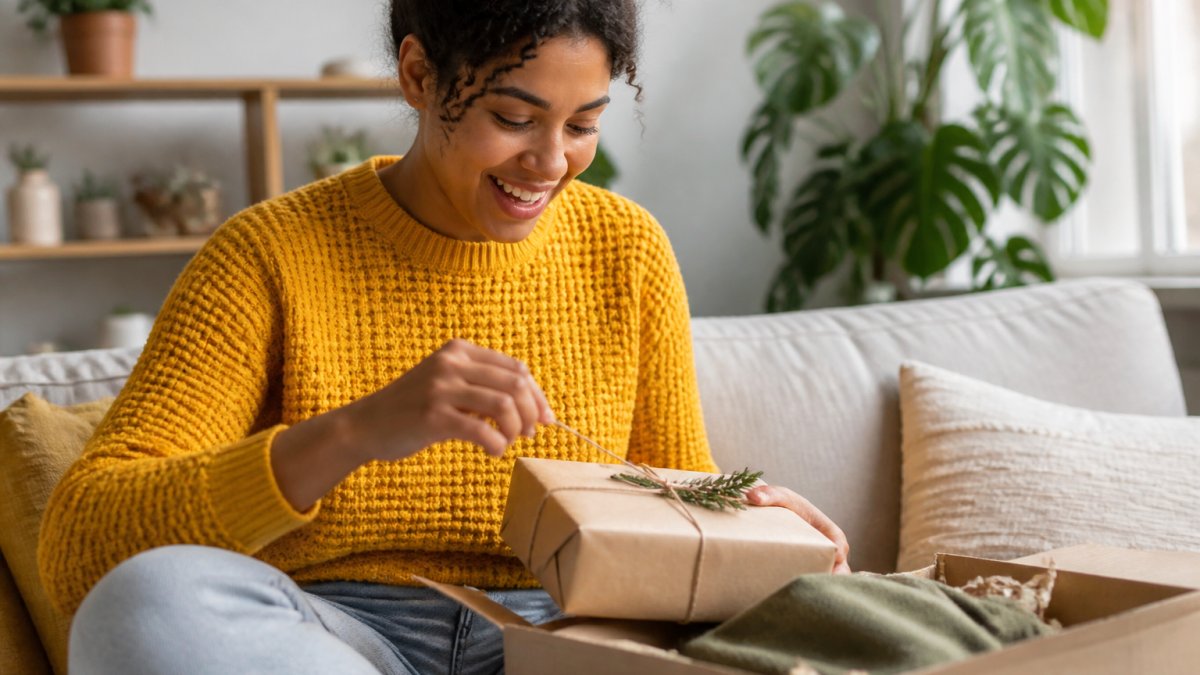
Personalization works best when it's built into the product itself, not added through extra packaging or materials. A monogrammed wooden board. A custom plant kit with the recipient's name. A handcrafted candle made in their favorite scent. These are personalized at the source, so no additional customization materials are needed.

The personalization doesn't have to be complex. Sometimes it's as simple as choosing a product in the recipient's favorite color or style. A cheese board in their preferred wood finish. A candle in their signature scent.
What makes personalized sustainable gifts feel more thoughtful is that they require actual consideration. You can't just order a generic item and call it done. You have to think about who the person is, what they value, and what they'd actually use.
Avoid the trap of over-personalizing. Adding monograms, custom printing, or special packaging on top of an already-sustainable gift can actually increase waste. If the item is already personalized enough through color choice or design selection, stop there. The gift itself is personal enough.
Sustainable gift wrapping and packaging is where many people stumble. They choose an eco-friendly gift, then wrap it in plastic that ends up in landfill. The packaging undermines the entire message.
Here's what actually works: kraft paper, recycled cardboard, fabric wraps, and plant-based materials. Kraft paper is affordable, recyclable, and looks intentional. Fabric wraps, like cotton or linen, can be reused by the recipient for storage or future gifting. Plant-based materials like seeded paper can be planted after unwrapping.
Avoid plastic bubble wrap, styrofoam peanuts, and laminated papers. These can't be recycled in most facilities and they're designed for single use. They're the opposite of sustainable.
The best packaging approach is minimal packaging. If a gift arrives in a reusable box, that's better than wrapping it in additional materials. If it comes with tissue paper instead of plastic, that's better than bubble wrap. Some of the best gifts arrive with just kraft paper and twine, no plastic tape, no foam, no excess.
One insider tip: many artisan and handmade products come already packaged thoughtfully. They arrive in recycled boxes with minimal materials. When you buy from artisans, you're often getting sustainable packaging as part of the deal.
The message of your gift should be consistent from outside to inside. If the gift is sustainable but the packaging isn't, the recipient gets a mixed signal. Make the entire experience align with your values.
Greenwashing is the biggest threat to sustainable gifting. A product can look eco-friendly while delivering little actual environmental benefit. Here's how to spot it.
Watch for vague claims. Words like "natural," "eco-friendly," or "green" without specifics are red flags. Natural doesn't always mean sustainable, natural materials can be harvested irresponsibly. Eco-friendly without detail could mean almost anything.
Check the certifications. Real sustainable products often carry third-party certifications. FSC (Forest Stewardship Council) for wood. GOTS (Global Organic Textile Standard) for cotton. Cradle to Cradle for overall sustainability.
Consider the source. Where is the product made? How is it shipped?
Look at the full lifecycle. What happens to the product after it's used? Can it be recycled? Composted? Reused?
Ask about materials. Legitimate sustainable brands can tell you exactly what their products are made from and why those materials were chosen. If a company can't answer this question, that's a warning sign.
The research from the Federal Trade Commission's Green Guides provides clear standards for what companies can and cannot claim about environmental benefits. If a product's claims seem too good to be true, they probably are.
At Home 2 Court, we prioritize transparency. Every product we recommend comes with clear information about materials, sourcing, and durability.
Choosing eco-friendly unique gifts means thinking beyond the moment of opening. It means considering the recipient's actual lifestyle, the product's real environmental impact, and whether the packaging aligns with the gift's values.
An eco-friendly gift combines responsible sourcing, sustainable materials, and minimal environmental impact across its entire lifecycle. Look for products made from natural resources like bamboo or organic cotton, manufactured using ethical practices, designed to last years rather than months, and packaged with minimal waste. Certifications from recognized bodies help verify claims. The best eco-friendly gifts reduce your recipient's reliance on single-use items and support their shift toward a more sustainable lifestyle.
Start by considering your recipient's actual lifestyle and values. Personalized sustainable gifts work best when they align with how someone already lives or wants to live. For someone who entertains frequently, a reusable serving board like the Date Night Board from Home 2 Court pairs eco-conscious design with personal utility. For others, handmade or artisan products feel more thoughtful because they reflect intentional craftsmanship. The key is matching the gift's sustainability story to something meaningful about the person receiving it.
Personalized gifts tend to feel more meaningful because they demonstrate you've thought about the specific person, not just grabbed something generic. When you combine personalization with sustainable materials and responsible sourcing, you're sending a message about both your relationship and your shared values. Handmade and artisan gifts naturally carry this weight because each piece is unique. The meaning comes from the intersection of thoughtfulness, quality, and alignment with what the recipient actually values.
Wedding guests appreciate gifts that enhance the couple's new home life together while reflecting environmental responsibility. Reusable serving pieces like the Calaisio Salad and Serving Bowl (made from glass and natural fibers) or the Date Night Board (featuring sustainable acacia hardwood and eco-friendly resin) become part of their entertaining routine for years. Handmade candles, plant kits, or personalized items in sustainable packaging also work well. These gifts signal that you're invested in the couple's future while respecting their desire to build a conscious lifestyle together.
