No Products in the Cart


Last Updated: October 24, 2026
Quick Summary
Pickleball shoes beginners need are engineered for the sport's quick lateral movements and sudden stops, with outsole designs matched to your court surface, aggressive tread for hard courts and smooth, flat tread for clay or soft courts. Choosing the right shoes prevents blisters, ankle rolls, and slips while providing the lateral support and responsive cushioning that tennis shoes cannot offer.
Pickleball shoes beginners need are not optional equipment. They're the foundation of your game.
Most beginners make a critical mistake: wearing regular tennis shoes or general athletic sneakers to the court. The wrong footwear causes blisters, ankle rolls, and court slips that proper gear would have prevented.
Pickleball demands quick lateral movements, sudden stops, and rapid direction changes on a smaller court than tennis.
At Home 2 Court, we help beginners understand that investing in proper pickleball shoes for beginners pays dividends from day one: better traction means fewer slips, lateral support means less ankle strain, and the right cushioning absorbs impact without weighing you down.
Your first decision isn't about brand or price. It's about where you play.
Each court surface demands a specific outsole design. Match the wrong outsole to the court and you'll either slip or feel like you're dragging your feet through mud, the single most important factor in choosing pickleball shoes for beginners.
Hard courts, concrete or acrylic surfaces similar to basketball courts, are the most common surface for recreational pickleball. They're fast, unforgiving, and require aggressive tread patterns.
Hard court shoes feature:
When shopping for pickleball shoes, look for visible tread depth. Run your finger across the bottom: distinct ridges and valleys create the micro-grip that keeps you planted when you stop fast.
Some facilities have clay or softer synthetic surfaces, which play completely differently.
Soft court surfaces are slower and stickier, gripping your shoe naturally, so you don't need aggressive tread.
Shoes for clay and soft courts have:
Before you buy, ask where you'll play most often. Hard courts? Prioritize hard court shoes. Splitting time between surfaces?
Different court surfaces require different outsole designs to maximize grip and performance.
| Court Surface | Outsole Design | Key Features |
|---|---|---|
| Hard court | Aggressive tread | Deep, angular patterns with multiple grooves |
| Clay or soft court | Smooth, flat tread | Minimal tread, flexible sole, gliding movement |
Indoor and outdoor pickleball shoes are built for different environments, and the differences matter more than most beginners realize.
Indoor courts are climate-controlled, dry, and consistent.
Indoor pickleball shoes feature:
Outdoor pickleball shoes are built tougher:
Play exclusively indoors? Indoor shoes feel lighter and more responsive. Play outdoors? Outdoor shoes give you the grip and durability you need.
One practical tip: check the outsole pattern. Indoor shoes have fine, closely-spaced tread; outdoor shoes have deeper, more widely-spaced grooves.
Tennis shoes and pickleball shoes look similar. They're not.
A good tennis shoe is not a good pickleball shoe. The difference comes down to court size and movement patterns.
Tennis courts are 78 feet long; pickleball courts are 44 feet. Tennis demands longer, more linear movements with occasional lateral shifts.
Here's what this means for your shoes:
Tennis shoes prioritize:
Pickleball shoes prioritize:
Wearing tennis shoes to play pickleball means sacrificing lateral support exactly where you need it most.
The investment in sport-specific footwear pays for itself in comfort and performance.
Traction is non-negotiable. Without it, you're playing on a slippery surface regardless of skill level.
The outsole pattern is what you see on the bottom of the shoe. Look for:
The rubber compound is harder to assess by looking, but you can test it:
The real test is how the shoe performs on your court.
If you can't test on a court, read reviews from people who play on your surface.
One practical indicator: new pickleball shoes should feel slightly sticky on the court when first worn, that's the grip working.
A perfectly designed shoe that doesn't fit is worse than useless. It's painful.
Fit is where most beginners go wrong. They buy shoes based on brand or looks and hope they work. This approach fails almost every time.
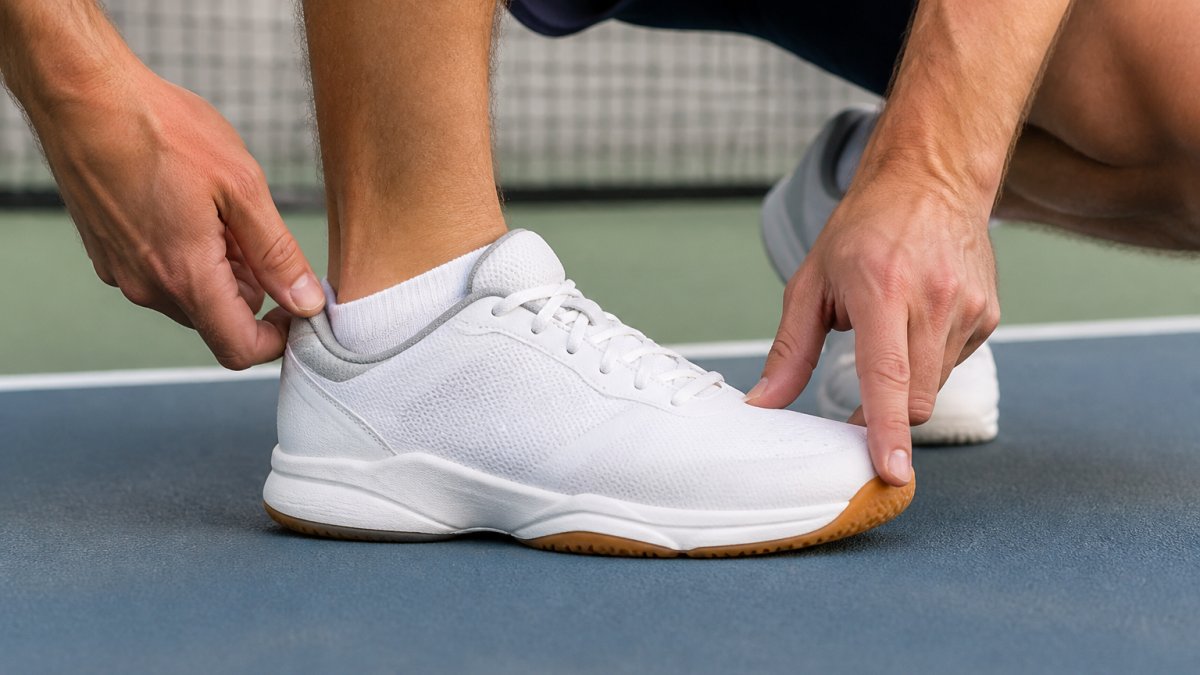
Your heel must stay locked in place during quick movements.
When you put on a pickleball shoe, pull the laces snug around your midfoot and instep first.
Midfoot support is equally critical. This is the area around your arch and the widest part of your foot.
Press down on the midfoot area while wearing the shoe. It should feel firm but not rigid.
Pickleball shoes come in different toe box widths. This matters far more than beginners realize.
A tight toe box causes:
A loose toe box causes:
When you try on pickleball shoes:
If you have wide feet, don't force yourself into a standard width shoe. Many brands offer wide versions. Your feet will thank you, and you'll play better.
New pickleball shoes need a break-in period, but it should be short. Wear them around your house for 30-60 minutes before playing.
During this break-in period, notice:
Before your first court session, do a fit check:
If anything feels wrong during these checks, don't play in them yet. Blisters and foot pain will develop within minutes on the court.
One important note: pickleball shoes should feel comfortable within the first 30 minutes of wear. They should not require extensive break-in.
Pickleball demands constant acceleration, deceleration, and direction changes. Your shoes need to support these movements without slowing you down.
Lateral support is the foundation.
Signs of good lateral support:
Stability is related but different.
Cushioning needs to be balanced.
Pickleball shoes typically have moderate cushioning:
When you're evaluating cushioning, jump lightly in the shoes. You should feel some give but not a lot of bounce.
Beginners often make this mistake: they prioritize maximum cushioning thinking it equals comfort. It doesn't.
Finding the right pickleball shoes beginners need doesn't have to be complicated.
Start by knowing your court surface. Hard court or soft court? Indoor or outdoor?
At Home 2 Court, we curate a selection of pickleball shoes designed specifically for beginners and recreational players. We understand that you need equipment that performs without requiring a professional-level budget. We stock shoes that balance quality, comfort, and value, so you can invest in proper footwear without overspending.
When you're ready to shop, look for shoes that match your court surface and come in your correct size and width.
Your feet will carry you through seasons of pickleball. Give them the support and protection they deserve from the start.
Regular athletic shoes, especially running shoes, lack the lateral support and court-specific traction that pickleball demands. Pickleball involves frequent side-to-side movements and quick direction changes that put stress on your ankles and knees. Dedicated pickleball shoes are designed with reinforced midfoot support, wider toe boxes for stability, and outsoles with grip patterns matched to your court surface. Beginners who skip this step often experience ankle strain or slips that could lead to injury. Investing in proper pickleball shoes protects your feet and improves your performance from day one.
Pickleball shoes should fit snugly at the heel with no slipping, but leave about a thumb's width of space at the toe box. Your heel should not lift when you walk or move laterally. Wear the same socks you'll play in when trying on shoes, and test them on a court if possible before purchasing. Break them in with short practice sessions rather than jumping into a full game. If you have wide feet, look for shoes with wider toe boxes and midfoot flexibility. Proper fit reduces blisters, improves ankle stability, and lets you focus on your game instead of foot discomfort.
Indoor pickleball shoes have smoother, more flexible rubber soles designed for hard wooden or synthetic court surfaces, with less aggressive tread to prevent sticking or dragging. Outdoor shoes feature thicker, more durable rubber with deeper tread patterns for grip on asphalt, concrete, or clay courts. Outdoor shoes also include extra durability features to withstand rougher surfaces and weather exposure. If you play both indoors and outdoors regularly, prioritize outdoor shoes, they work adequately on indoor courts but provide better protection and grip overall. Beginners playing primarily at one location can choose accordingly.
Look for outsoles with tread patterns specifically designed for court traction, not running or hiking shoes. The rubber compound matters too, softer rubber grips better but wears faster, while harder rubber lasts longer but may slip on wet courts. Check the tread pattern for lateral grooves that support side-to-side movement. Test the grip by scuffing the sole on the court surface before buying if possible. A shoe with poor traction will cause you to slide or compensate with your ankles, increasing injury risk.
Choosing the right pickleball shoes as a beginner sets you up for success on the court. The process is straightforward when you focus on court surface, fit, and the specific features pickleball demands. At Home 2 Court, we help you find equipment that matches your needs and your budget, so you can focus on the game. Visit Home 2 Court today to explore our curated selection of beginner-friendly pickleball shoes and discover how the right footwear transforms your play.

