No Products in the Cart


Last Updated: September 20, 2026
Modern farmhouse living room style blends rustic charm with contemporary design, combining natural materials, neutral palettes, and vintage-inspired pieces with clean lines and minimalist sensibilities.
Modern farmhouse adapts beautifully to any space, suburban home or urban apartment. The key is layering textures, choosing warm woods and natural materials, and resisting over-decoration. It feels authentic without requiring a complete design overhaul.
Modern farmhouse strips away clutter. Where vintage farmhouse embraced maximalism, the modern interpretation favors intentional curation, fewer pieces, each with weight and purpose.
A neutral color palette, creams, soft whites, warm grays, muted taupes, creates a restful backdrop for textures and architectural details.
Accent colors lean toward earthy tones: soft sage, terracotta, ochre, and charcoal. Choose one or two maximum and use sparingly, a single accent wall, statement piece, or layered textiles in one tone.
Black accents, window frames, metal fixtures, hardware, create visual contrast and sophistication without feeling jarring.
| Color Type | Recommended Shades | Best Use | Why It Works |
|---|---|---|---|
| Neutrals | Cream, warm white, soft gray | Walls, large furniture | Creates calm foundation |
| Warm Accents | Sage, terracotta, ochre | Textiles, smaller pieces | Adds subtle visual interest |
| Dark Accents | Charcoal, black | Hardware, frames, trim | Provides contrast and definition |
| Natural Tones | Warm wood, tan, beige | Flooring, wood elements | Complements organic materials |
Natural materials form the backbone of modern farmhouse design. Warm, aged, or distressed wood appears in flooring, beams, furniture, and accessories, paired with stone accents, linen, and woven elements like rattan or jute.
Texture brings modern farmhouse to life. Rough-hewn beams, weathered stone, soft linens, and chunky knits create visual and tactile interest. Layered thoughtfully, textures add depth and warmth.
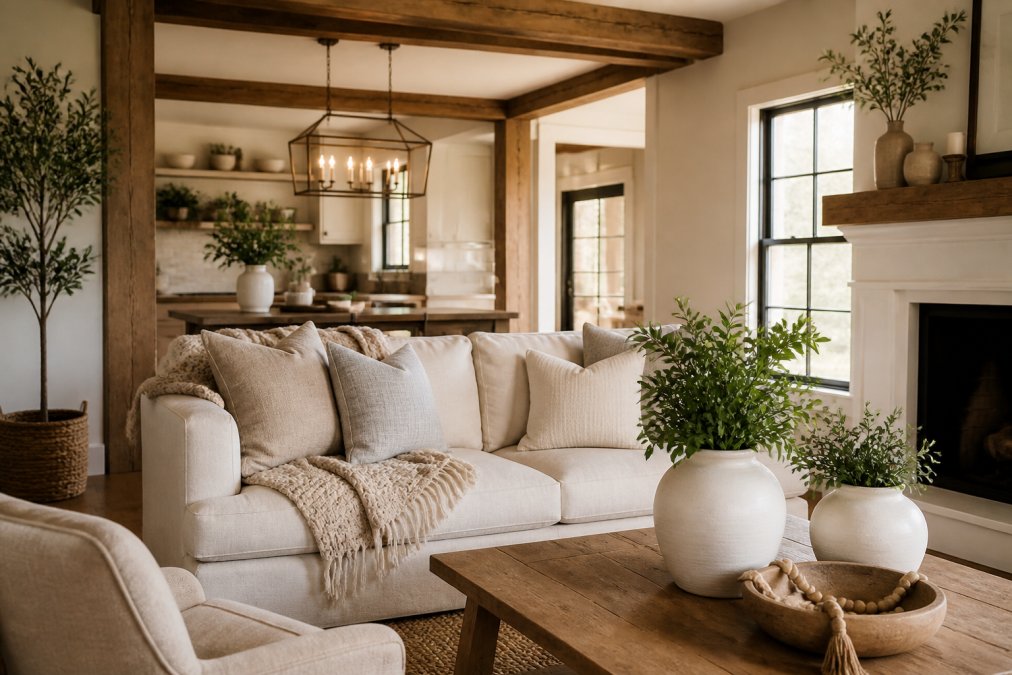
Consider incorporating pieces like the Park Hill Collection Urban Living Diamond Pattern Alpaca Wool Throw at $170. This hand-woven throw in luxurious alpaca wool adds both warmth and refined texture to any seating area. The natural fiber is lightweight yet exceptionally warm, and the diamond pattern provides visual interest without overwhelming a neutral palette.
Textile layering creates lived-in charm. Start with a quality jute or sisal rug, then layer throws, pillows in varying textures, and quilted blankets.
Mix fiber types, linen with wool, cotton with jute, to create visual rhythm. The goal is settled comfort, not staged perfection.
Statement lighting fixtures, chandeliers, iron lanterns, pendant lights, serve as focal points. The Napa Home & Garden Daphne Lantern Small in Antique Gold at $162.50 provides ambient lighting while adding architectural interest.
Architectural details, exposed beams, shiplap, built-ins, black frames, create the framework. If lacking, introduce them through paint, removable wallpaper, or strategic furniture placement.
Home 2 Court offers a curated selection of home decor pieces, handcrafted ceramics, artisan textiles, chosen for quality and design authenticity.
White ceramics are foundational. The White Textured Ginger Jar in Extra Large by 8 Oak Lane at $89 brings sculptural interest; pair with the Small version at $33 for a layered look.
The Saul Pots Set of 2 at $55 feature creamy white glaze and exposed clay bases. Use as cachepots or sculptural elements.
The Napa Home & Garden Daphne Mirror at $350 adds sophistication with its gold finish and refined design. Mirrors expand visual space and reflect light.
Functional pieces like the 8 Oak Lane Black Rectangular Tray at $42 anchor a coffee table or console. The matte black resin and sleek handles provide modern contrast while the form feels timeless. Use it to corral remotes, display candles, or serve drinks when entertaining.
Small spaces require intentional choices: natural materials, neutral palettes, and layered textures, prioritizing visual lightness and functional density.
In compact living rooms, choose a 72-inch neutral sofa with clean lines over a bulky sectional. Pair with a single accent chair in natural wood or rattan rather than two.
Use vertical space: floating shelves display ceramics and plants without consuming floor area. A tall, narrow bookcase serves as storage and subtle room divider.
A 5×7 jute or sisal rug anchors a seating area. Avoid oversized rugs that extend beyond furniture groupings.
A single statement pendant draws the eye upward, making ceilings feel higher. Table lamps on narrow consoles add layered light without requiring floor space.
A narrow console table (24-30 inches) with a mirror and single woven basket beneath creates function without blocking traffic flow.
Park Hill Collection Urban Living →
Hallways benefit from one statement element: a gallery wall or console with grouped ceramics and a mirror. Avoid multiple pieces.
Layer linens in cream, soft white, and warm gray, a white duvet with cream throw and taupe pillows creates depth. A quilted throw at the foot adds warmth.
A wooden nightstand with ceramic lamp and potted plant completes the aesthetic. In smaller bedrooms, a floating shelf replaces a second nightstand.
Use minimal linen curtains in cream or white on simple black or natural wood rods. Avoid heavy drapes or patterns.
Open shelving with white dishware, glass jars, and potted herbs creates charm. Renters can use a kitchen cart or removable floating shelf.
Keep countertops clear. Use natural wood cutting boards, ceramic bowls, and glass containers as functional and decorative elements. A potted herb adds greenery.
Black or oil-rubbed bronze handles provide contrast. Renters can use adhesive-backed covers for temporary updates.
White ceramics, linen towels, and glass containers maintain the aesthetic. A wooden stool adds function and visual interest.
One statement piece, a botanical print, ceramic vessel, or wood-framed mirror, prevents sterility.
A console table behind a sofa or tall bookcase creates visual boundaries between zones while allowing modern farmhouse living room style to flow throughout.
Paint walls warm white or soft gray, or refresh existing furniture. A painted dresser or bookcase styled with decorative pieces becomes a statement.
Natural materials define modern farmhouse aesthetics but require understanding maintenance demands and trade-offs.
Hardwood flooring is central to modern farmhouse style but requires maintenance. Solid hardwood is sensitive to moisture and shows scratches and dust readily.
Natural stone is porous and vulnerable to staining and etching. Marble etches from acidic substances, leaving difficult-to-remove marks.
Distressed wood pieces embrace patina; dust regularly with soft cloth. Avoid polish on raw or lightly finished wood, which traps dust.
Natural fibers have limitations: linen wrinkles and stains visibly, wool pills, cotton is less luxurious. Consider performance fabrics for high-traffic seating.
Display ceramics on stable shelves away from high-traffic zones. Secure tall pieces with museum putty if you have children or pets.
Potted plants are integral to modern farmhouse design, but they demand consistent care. Choose plants suited to your home's light conditions; a plant struggling in low light will drop leaves and look sad rather than charming. Common modern farmhouse plants include pothos, snake plants, and fiddle leaf figs, but these have different water and light requirements.
Mirrors like the Napa Home & Garden Daphne Mirror are functional and decorative, but they require frequent cleaning to maintain their impact. Fingerprints, dust, and water spots are visible on glass, making mirrors look neglected quickly.
Modern farmhouse living rooms require more active maintenance than minimalist or industrial spaces. A realistic weekly schedule includes sweeping hardwood floors, dusting surfaces and ceramics, and wiping mirrors. Monthly tasks include damp-mopping floors, cleaning textiles, and rotating plants. Quarterly deep cleaning involves conditioning wood furniture, sealing stone if needed, and washing throws and pillows.
Yes, modern farmhouse living room design continues to evolve and remain popular in 2026. The aesthetic has matured to emphasize cleaner lines, more sophisticated neutral palettes, and a balance between rustic charm and contemporary minimalism. Homeowners are drawn to the warm, inviting atmosphere it creates while appreciating its timeless appeal and flexibility for blending with other design styles.
The 2026 modern farmhouse color palette centers on neutral tones including warm whites, soft grays, creams, and natural beiges. Earthy tones like warm browns, muted greens, and soft terracotta serve as accent colors. Black window frames and matte finishes provide subtle contrast. This grounded design approach creates a relaxed, cohesive foundation that allows natural textures and architectural details to shine without visual clutter.
Start by refreshing your textiles with layered throws and pillows in natural fabrics. Swap out lighting fixtures for modern statement pieces with antique finishes. Add white ceramic cachepots or ginger jars as accent pieces, and incorporate woven elements like rattan or wicker. Paint or refinish existing wood furniture to highlight natural grain. These budget-conscious updates transform the space while preserving your existing layout and structural elements.
Essential textures include natural linens, soft alpaca wool throws, distressed wood surfaces, and hand-hewn beam accents. Incorporate wicker, rattan, and woven baskets for organic warmth. Mix matte ceramic finishes with smooth glass and polished metals. Layering these varied textures creates the lived-in charm that defines modern farmhouse style while maintaining a curated, intentional aesthetic rather than a cluttered appearance.
