No Products in the Cart


Last Updated: October 9, 2026
Mindful living spaces and traditional home design represent two fundamentally different philosophies about how we inhabit our homes. At Home 2 Court, we believe understanding these approaches helps you create an environment that supports your well-being. One prioritizes intentional design for mental restoration; the other emphasizes established aesthetics and comfort through familiarity.
Your home's design directly influences your daily stress levels, sleep quality, and sense of peace. Mindful living spaces are built on the principle that every element, from color to material to spatial layout, should support your mental and physical wellness. Traditional home design draws from established rules and cultural conventions that have proven comfortable over time. Neither is inherently superior; the right choice depends on your priorities, budget, and how you actually live.
| Aspect | Mindful Living Spaces | Traditional Home Design |
|---|---|---|
| Core Focus | Mental well-being and restoration | Aesthetic appeal and comfort |
| Material Approach | Natural, organic, sustainable materials | Varied; often mixed materials and finishes |
| Color Strategy | Muted, calming palettes | Diverse; can include bold or saturated tones |
| Clutter Philosophy | Minimal visual clutter; intentional placement | Balanced; decorative items for interest |
| Lighting | Maximizes natural light; soft artificial lighting | Layered lighting for ambiance and function |
| Space Feel | Open, breathing, restorative | Warm, inviting, established comfort |
| Design Timeline | Evolves with personal needs and mindfulness practice | Follows established design trends and rules |
Mindful living spaces represent a deliberate shift away from default decorating toward intentional design. A mindful living space is an environment where every object, color, and spatial arrangement serves a functional or restorative purpose. The goal isn't an Instagram-worthy room; it's a sanctuary that reduces stress, supports focus, and encourages restoration.
The core idea is that your surroundings affect your nervous system. Visual clutter triggers low-level stress, harsh lighting disrupts sleep and mood, and poor spatial flow creates friction in daily routines. Mindful living spaces address these by removing what doesn't serve you and amplifying what does.
Mindful interior design follows several interconnected principles. First is intentionality: nothing enters your space by accident or because it was on sale; every piece serves your wellness or daily life. Second is simplicity, meaning each visible element earns its place.
A mindful approach also emphasizes connection to natural rhythms. Your bedroom might block artificial light and use cool, calming tones to support sleep, your work area might maximize daylight for focus, and your living room might feature natural materials and open sightlines to promote relaxation.

Practitioners often describe mindful interior design as the opposite of trend-driven decorating. Instead of following this season's palette or furniture style, you ask: What do I actually need? What makes me feel calm?
Traditional home design draws from established principles and cultural aesthetics that have evolved over decades. It's rooted in the idea that certain color combinations, furniture arrangements, and decorative approaches simply work, creating spaces that feel welcoming and put-together.
Traditional design isn't a single style; it encompasses classic American, farmhouse, cottage, transitional, and eclectic approaches. What unites them is reliance on established rules: balance, symmetry, layered lighting, statement pieces, and mixed textures.
The strength of traditional design is that it works. People feel comfortable in traditionally decorated spaces because the rules are based on what humans find pleasing and functional: symmetry feels balanced, warm lighting feels inviting, and mixed materials keep a space from feeling monotonous.
The relationship between your home's design and your mental health is direct and measurable. Spaces that support restoration through reduced clutter, natural light, and organic materials tend to lower cortisol levels and improve sleep quality. This is where mindful living spaces and wellness-focused traditional design overlap: both recognize that your environment shapes how you feel.
Mindful spaces support restoration by removing cognitive load. Your brain processes everything it sees, even subconsciously, so a room crowded with objects and visual noise requires constant processing.
Natural materials amplify this effect: wood, stone, linen, and ceramics create a sensory connection to nature that research suggests promotes calm and reduces stress.

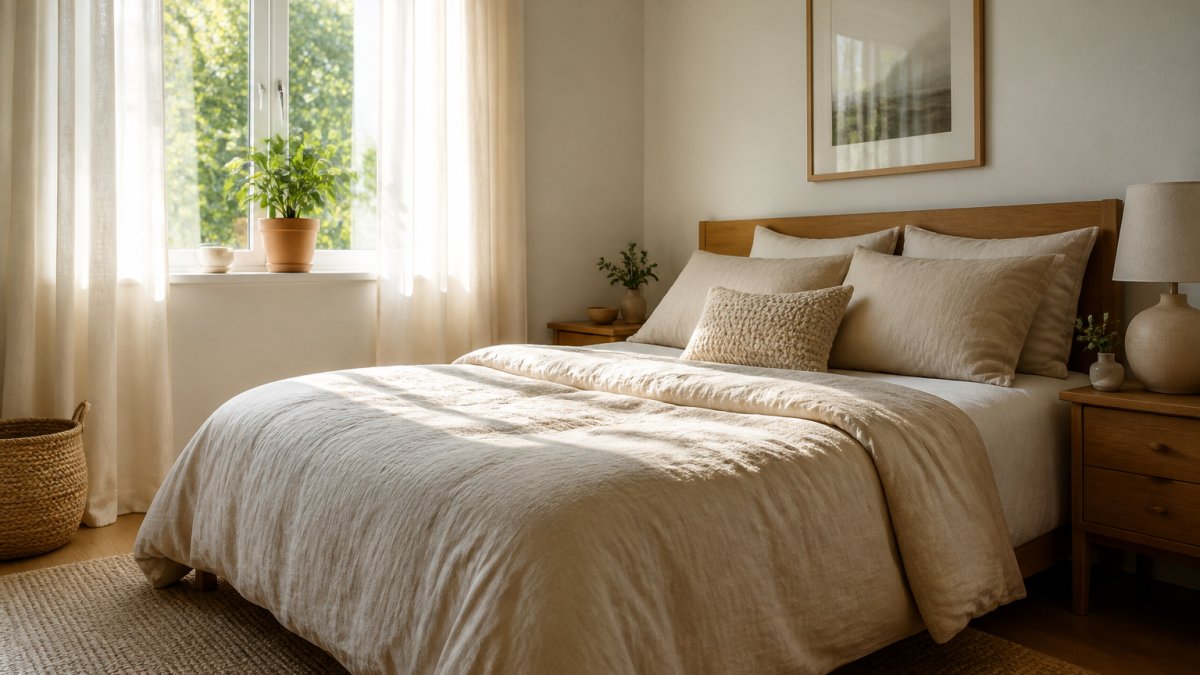
Many people find mindful spaces restorative because they align with how humans evolved to feel safe. We're drawn to natural materials, soft light, open sightlines, and order, and a mindful home leverages these instincts intentionally.
Traditional design supports well-being through familiarity and warmth. A room in a cohesive, established style feels "right" because it follows rules our brains recognize as harmonious, and symmetry, balanced color, and focal points create a psychologically comforting sense of order.
Traditional spaces often feel more lived-in and inviting than minimalist ones. A bookshelf with varied spines or a gallery wall of family photos creates visual interest many people find engaging rather than stressful.
Comfort in traditional design also comes from ritual and familiarity. If you grew up with warm wood tones, layered lighting, and decorative objects, a traditionally designed space may feel more like home than a minimal, modern one. Your sense of safety and belonging matters as much as any design principle.
Implementing mindful design doesn't require a complete overhaul. You can introduce mindful principles incrementally through three key areas: materials, color, and light.
Natural materials, wood, stone, ceramic, linen, wool, rattan, form the foundation of mindful spaces. These materials connect you to the natural world, a principle called biophilic design. Unlike plastic, metal, or synthetic fabrics, natural materials age visibly, develop patina, and feel warm to the touch. This sensory richness supports restoration.
Biophilic design extends beyond materials to include living elements: plants, natural light, views of nature, and water features. A single potted plant on a windowsill or a vase of fresh branches can shift a room's energy. The research on biophilic design and workplace productivity suggests that even small connections to nature measurably improve focus and mood.
Home 2 Court's curated collection includes pieces that embody these principles. The Basketweave Drum Pot Large ($20.63), for example, mimics basketry with soft, organic texture, perfect for holding plants or displaying on a shelf to add natural warmth. For larger statements, the Napa Home & Garden - Avila Vase Clear ($200.00) is handcrafted from recycled glass in Spain, combining sustainability with sculptural presence. These pieces serve the dual purpose of supporting biophilic design while adding intentional, beautiful objects to your space.
Mindful color palettes emphasize muted, calming tones: soft greens, warm grays, creams, soft blues, and earthy neutrals. These colors don't overstimulate the visual cortex and allow your eye to rest. Traditional design often uses richer, saturated colors, deep blues, warm reds, jewel tones, which create visual interest and energy.
The choice depends on your needs. If you work from home and need focus, a mindful palette supports that; if you entertain frequently and want energy, traditional colors may suit you better.
Color also affects how you experience light. A room painted in soft gray or cream reflects light gently, making spaces feel open and airy. A room with darker, richer tones absorbs light and can feel more intimate, but also smaller if natural light is limited.
Lighting is perhaps the single most powerful tool in either approach.
Traditional design uses layered lighting: ambient overhead light, task lighting for reading or work, and accent lighting for artwork or architectural features. This flexibility is practical, though multiple light sources can feel busy if not carefully balanced.
Intentional placement in mindful design means arranging furniture to support how you actually use the space: your work area faces the window for natural light, your reading chair sits near a lamp, and your bed positions you to see the door.
Both approaches have different cost profiles and longevity considerations. Mindful spaces often cost less to furnish initially because they emphasize quality over quantity: a few well-chosen, durable pieces beat a room full of trend-driven furniture. Natural materials like wood, ceramic, and linen age well and become more beautiful with time.

Traditional design can be affordable or expensive depending on your choices. High-quality traditional furniture holds value and lasts decades, while trend-driven pieces following this season's color or style may feel dated within a few years, creating pressure to refresh.
From a longevity perspective, mindful spaces have an advantage: they're not tied to trends. A room designed around your wellness needs and natural materials won't feel dated because it was never about fashion, so the foundational design remains relevant as your life changes.
The return on investment for mindful design comes in reduced stress, better sleep, and lower replacement costs. For traditional design, the return is psychological comfort and a home that feels welcoming to guests. Both are valid, just different.
Mindful living spaces work best for people who prioritize mental health, value simplicity, and are willing to be intentional about every purchase.
Traditional home design works well for people who value established aesthetics, enjoy decorating as a creative outlet, and want their space to reflect cultural or family traditions. It suits frequent entertainers who want a warm, welcoming environment, and those who prefer visual richness over minimalism.
Many people find a hybrid approach most satisfying: a mindful foundation, open space, natural materials, intentional layout, with traditional touches like artwork, textiles, and decorative pieces that reflect personality and warmth. This balances restoration with comfort and individuality.
The practical truth is that your home should support your life, not constrain it.
Creating a home that supports both relaxation and the life you actually live is the goal, whether you lean mindful or traditional. Home 2 Court's thoughtfully curated collection, from the handcrafted Napa Home & Garden - Serena Decorative Bowl ($180.00) to the accessible IVORE.GROUP - B Modern Decorative Plant Hydroponic Vase ($28.00), brings intentional, beautiful pieces into your space without the overwhelm of endless options. Whether you're building a mindful sanctuary or adding warmth to a traditionally styled room, our selection helps you invest in pieces that matter. Explore our curated home decor collection and find the pieces that support your vision.
Mindful living spaces prioritize intentional design that supports well-being, stress reduction, and restoration through natural materials, minimal visual clutter, and purposeful furniture placement. Traditional home design emphasizes established aesthetic styles, craftsmanship, and timeless appeal without necessarily focusing on wellness outcomes. Mindful spaces ask 'how does this support my mental health?' while traditional design asks 'does this reflect a cohesive style?' Both can coexist, many homes blend mindful principles with traditional decor elements.
Start by reducing visual clutter and introducing natural materials like wood, stone, and textiles. Use muted color palettes with soft, calming tones. Maximize natural light and add plants for biophilic connection. Place furniture intentionally to support function and flow rather than fill space. Choose pieces that serve a purpose and bring intentional joy. Handcrafted items like artisan bowls or natural fiber pots add texture and craftsmanship that supports a restorative atmosphere without requiring a complete redesign.
Mindful interior design reduces stress, supports mental health, and creates restorative spaces where you can genuinely relax. Open layouts and minimal visual clutter improve focus and reduce cognitive load. Natural materials and connection to nature promote a sense of calm and well-being. Intentional furniture placement improves functionality, reducing frustration in daily life. Thoughtful design also encourages slower living and mindfulness, helping you be more present in your home rather than constantly seeking external stimulation.
Yes. Traditional design's emphasis on craftsmanship, timeless pieces, and established aesthetics can absolutely support wellness. Handcrafted items carry a sense of care and longevity that promotes attachment and reduces the stress of trend-driven consumption. Classic styles often use natural materials and balanced proportions that feel inherently calming. The key difference is intentionality: traditional design supports wellness through durability and beauty, while mindful design explicitly prioritizes restoration and mental health. Many homes successfully combine both approaches.
