No Products in the Cart


Last Updated: October 2, 2026
Home staging is the strategic arrangement and presentation of a property to help buyers envision themselves living there, and understanding is professional home staging worth it for comfort is essential for sellers deciding on this investment.
When done right, professional home staging transforms a house into a home. It removes clutter, neutralizes bold personal choices, and arranges furniture to highlight flow and functionality. The goal is to help buyers feel at ease the moment they walk through the door. A well-staged home invites people to imagine their own lives unfolding in those spaces.
At Home 2 Court, we understand that comfort in a home comes from thoughtful curation and intentional design choices. Whether you're decorating for yourself or preparing to sell, the principles are similar: create spaces that feel welcoming, functional, and visually appealing. A staged home does exactly that, it uses neutral color palettes, strategic lighting, and carefully selected furnishings to create an environment where buyers can picture themselves relaxing, entertaining, and building memories.
The difference between staging for comfort versus staging purely for aesthetics matters more than many sellers realize. A home can look stunning in photos but feel cold and uninviting in person. True staging balances visual appeal with livability, ensuring that the space doesn't just photograph well, it feels good to be in.
Staging for comfort prioritizes how a space feels, while aesthetic staging prioritizes how it looks. This distinction changes everything about the approach.
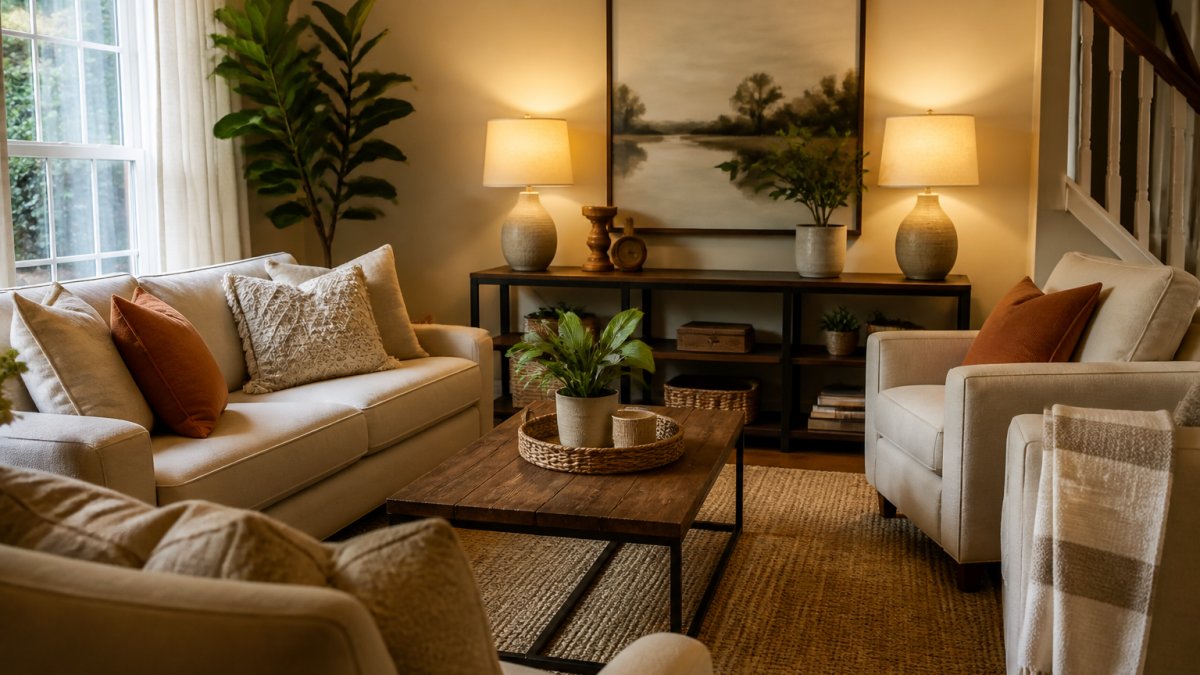
Comfort-focused staging emphasizes livability. It arranges seating to encourage conversation, positions lighting to feel warm and inviting, and includes soft textures like throw pillows and area rugs that make spaces feel cozy.
Aesthetic staging, by contrast, prioritizes visual impact. It may position furniture for camera angles rather than actual use, rely heavily on minimalism, and focus on color coordination and design trends.
The best staging blends both approaches. You want a home that photographs well and feels genuinely comfortable. This means choosing neutral colors that won't clash with buyer preferences, but adding warmth through lighting fixtures and soft furnishings. It means decluttering ruthlessly while still maintaining a lived-in feel, not a showroom aesthetic.
A common mistake is over-staging. Buyers can sense when a space feels fake or uninviting. If every surface is empty and every room is perfectly symmetrical, it doesn't feel like home.
Buyer perception is heavily influenced by emotional response. The moment someone walks into a staged home, they're subconsciously evaluating whether they feel welcome and comfortable. This emotional first impression shapes their entire perception of the property.
Depersonalization plays a critical role here. When a home is filled with family photos, bold wall colors, or niche decor, buyers struggle to see themselves in the space.
Lighting fixtures deserve special attention because they dramatically affect how comfortable a space feels. Harsh overhead lighting makes rooms feel institutional. Soft, layered lighting from lamps and fixtures creates warmth and intimacy.
The arrangement of furniture also influences buyer perception. When seating is positioned to encourage conversation and movement flows naturally through the space, buyers feel the home's functionality immediately.
Professional home staging costs vary widely depending on the scope and location, but understanding what you're paying for helps determine whether it's worth the investment for your specific situation.
For a typical home, professional staging services can range from a staging consultation only (where a professional walks through and provides recommendations you implement yourself) to full-service staging (where the company brings in furniture, decor, and handles all arrangement and styling).
What you get with professional staging usually includes:
Some staging companies offer virtual staging services, where digital renderings show how a space could look with different furniture or decor. This option costs less than physical staging but provides less tangible impact on actual buyer experience.
The investment in staging typically pays off through faster sale times and potentially higher selling prices, but the upfront cost is real. Many sellers ask themselves: is this expense worth it?
If professional staging isn't in your budget, you can apply staging principles yourself using items you already own.
Declutter ruthlessly. Remove at least 30% of items from each room. Pack away excess books, decorative objects, and personal items.
Depersonalize strategically. Pack away family photos, children's artwork, and items with strong personal meaning. Replace them with neutral, curated decor that any buyer might appreciate.
Umbrella Mahjong Mat – Seaglass - 33x33 Outdoor Patio Table Cover - Home2Court →
Arrange furniture for flow. Walk through each room and trace the natural path people would take. Furniture should guide movement, not block it.
Layer your lighting. If possible, add table lamps or floor lamps to supplement overhead lighting.
Use neutral colors as your base. Paint bold accent walls a neutral tone if you're selling.
Add soft textures and greenery. A few throw pillows, an area rug, and some potted plants humanize a space without personalizing it. These elements add warmth and visual interest while remaining universally appealing.
Open curtains and windows. Natural light makes spaces feel larger and more welcoming.
Virtual staging uses digital rendering to show how a space could look with different furniture and decor. Physical staging involves actually arranging and furnishing the space.
Virtual staging is cost-effective and useful for marketing. It allows you to show multiple design options for the same space in listing photos and online tours.
Physical staging creates real comfort. A buyer who walks into a space with soft lighting, comfortable furniture, and inviting decor experiences the comfort directly.
The best approach often combines both. Use virtual staging for online marketing to attract buyers, then ensure the physical space is staged well for in-person showings.
For comfort specifically, physical staging wins. You can't digitally render the warmth of soft lamplight or the comfort of a well-arranged seating area.
Professional staging makes the most sense in specific situations. Understanding when it's worth the cost helps you make a smart financial decision.
Staging is worth the investment when:
Staging may not be worth it if your home is already move-in ready, your market isn't competitive, or you're selling a modest property in a buyer's market. In these situations, basic decluttering and depersonalization might be sufficient.
The financial return on staging varies. In strong seller's markets, staging can increase perceived value and reduce days on market. In slower markets, it may simply make your home competitive rather than generating a premium price.
Professional home staging is worth the investment when comfort and emotional connection matter more than pure aesthetics.
If you're preparing to sell, consider staging a strategic investment in your property's appeal.
| Staging Approach | Cost Level | Best For | Comfort Impact |
|---|---|---|---|
| DIY with existing items | Low | Budget-conscious sellers | Moderate, depends on execution |
| Staging consultation only | Low to moderate | Sellers with decent furnishings | Moderate, guidance without full redesign |
| Virtual staging | Low to moderate | Online marketing and photos | Low, doesn't create real experience |
| Partial professional staging | Moderate | Specific problem rooms | High, targets key areas |
| Full professional staging | Moderate to high | Vacant homes or competitive markets | High, comprehensive comfort transformation |
Professional home staging costs vary depending on the property size, location, and scope of work. For comfort-focused staging, you may spend less than full sale preparation since the goal is livability rather than maximum market appeal.
Staged homes can spend less time on the market compared to unstaged properties. However, the real benefit for comfort is that staging creates better flow and functionality in your daily living. When spaces are decluttered, properly lit, and thoughtfully arranged, you experience improved comfort immediately. The faster selling speed is a secondary benefit of creating an emotionally appealing environment that buyers can visualize themselves living in.
Yes, you can create significant comfort improvements through DIY staging. Focus on decluttering, depersonalizing key spaces, improving lighting fixtures, and arranging furniture for better flow and functionality. The main difference is that professionals have staging inventory and design expertise to work faster. DIY staging works best when you prioritize comfort over aesthetics, invest in a few quality pieces like curated decor items, and follow a clear plan for each room's purpose.
Staging for sale emphasizes visual appeal and market value, using neutral color palettes and minimal personal items to help buyers envision themselves in the space. Staging for comfort prioritizes livability, emotional connection, and how spaces actually function for daily life. Comfort-focused staging includes welcoming personal touches, warm lighting, and furniture arrangements that encourage relaxation and gathering. Both improve buyer perception, but comfort staging creates a home you genuinely want to live in.
