No Products in the Cart


Last Updated: August 25, 2026
The gap between a $100 paddle and a $300 paddle involves genuine mechanical differences: ball response, spin generation, and shot consistency. Entry-level paddles use composite materials or basic polymer cores, heavier, smaller sweet spot, less grip for advanced spin. Premium paddles with raw carbon fiber facing, honeycomb cores, and thermoformed construction deliver crisper feel and more predictable response.
Diminishing returns kick in fast: moving from $60 to $150 nets substantial gains in control and spin. Moving from $150 to $250 brings smaller improvements. Moving from $250 to $350 brings even smaller gains. The curve flattens quickly.
Raw carbon fiber facing grips the ball better than composite materials, allowing more reliable spin. Honeycomb core technology creates a larger, more forgiving sweet spot while maintaining responsiveness. Thermoformed construction (face and core fused under heat) improves durability and reduces delamination. Premium paddles hold up longer; budget paddles can develop dead spots after a season of heavy play.
The jump from entry-level to mid-premium ($100 to $180) delivers the most noticeable improvement in feel, control, and durability. The jump from mid-premium to elite ($180 to $300+) is incremental, you're optimizing for competitive play, not unlocking new capabilities. Beyond $300, gains are marginal. You're paying for prestige and tournament legality, not functional advantage.
No. Beginners do not need expensive gear. A $100-$150 paddle with composite face and polymer core serves perfectly for your first year. A $250 paddle won't fix your serve, footwork, or court positioning.
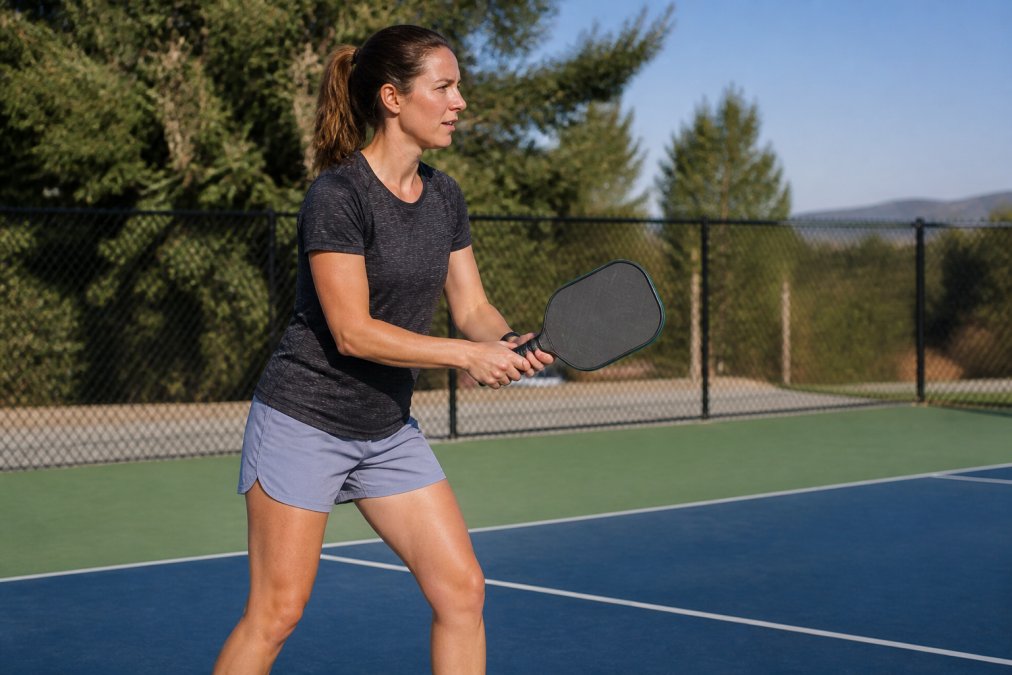
Three forces push beginners toward premium gear: social proof (seeing advanced players with high-end paddles), marketing (positioning premium models as "professional grade"), and the desire to commit (expensive gear signals seriousness). What matters for beginners is paddle weight, grip size, and basic durability. A $120 paddle with 4.25-inch grip circumference and mid-range weight (7.5-8 ounces) teaches everything you need.
Beginners need a functional, reliable paddle. Intermediate players (6-18 months in) can benefit from upgrading to mid-premium with honeycomb core and composite face. Advanced players and competitors justify premium gear because they've exhausted mid-range equipment's performance ceiling and have developed technical skill to access premium features.
Home 2 Court curates equipment across all tiers, helping you match gear investment to actual skill level rather than aspirations.
Start with fundamentals. Paddle weight matters more than face material for beginners. A heavier paddle (8-8.5 ounces) generates more power but requires arm strength. A lighter paddle (7-7.5 ounces) is easier to maneuver but demands more technique. Grip circumference is non-negotiable: measure from base of palm to middle finger tip and match to paddle sizing (typically 4.0 to 4.5 inches).
Core thickness is the next decision. A 14mm core offers more control and solid feel. A 16mm core provides larger sweet spot and more forgiveness. For beginners, 16mm is safer.
Raw carbon fiber faces deliver maximum spin potential and crisp feel. Composite faces, blending carbon fiber with fiberglass, offer 80% of spin potential at 60% of the cost. Polymer cores are dense and stable, offering predictable feel and good durability. Honeycomb cores are lighter and more forgiving, creating larger sweet spots.
The Electrum Model E Elite ($199) demonstrates raw carbon fiber value at mid-premium price. For beginners, neither premium option is necessary. For intermediate players working on advanced shots, both offer genuine advantages.
The sweet spot is where ball contact produces most predictable response and power. Larger sweet spots are more forgiving; off-center hits still feel decent. Paddle weight affects swing speed and fatigue. Most competitive players settle around 7.8-8.2 ounces as the balance point.
Unit-to-unit consistency means two paddles from the same manufacturer and model feel nearly identical. Premium paddles maintain tighter manufacturing tolerances. This matters less for recreational play but becomes important when developing feel for specific shots.
A well-maintained paddle lasts 1-3 years of regular play (3-4 times per week). Budget paddles deteriorate faster; premium paddles hold up longer due to superior thermoforming and edge protection.
Thermoformed construction fuses face and core under heat, creating more durable bond. Budget paddles often use adhesive, which can fail over time. After 12-18 months of heavy play, premium paddles still feel crisp; budget paddles develop dead zones. Edge guards protect the perimeter from impact damage. If you play aggressive volleys near the net, edge durability matters.
Maintenance is straightforward: keep your paddle dry, avoid extreme temperature changes, and store in a padded case. There are no hidden care costs.
Resale value is where expensive gear makes financial sense. A $300 premium paddle typically retains 40-50% of value on the used market after a year (peer-reviewed research). A $100 budget paddle retains 20-30%. Over multiple upgrades, premium paddles' better resale value partially offsets higher upfront cost. However, this logic only works if you're actually upgrading regularly.
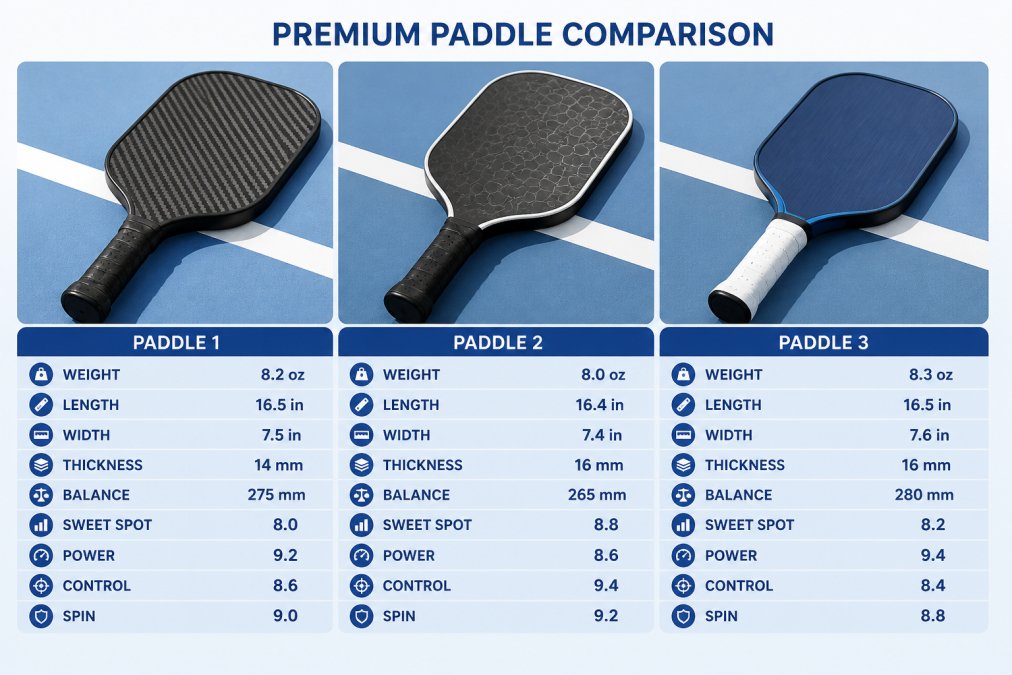
The JOOLA Perseus Pro V ($299.95) is built for advanced players who've mastered spin technique and want maximum consistency. The raw carbon fiber face generates exceptional ball grip. KineticFrame technology enhances consistency and ball placement.
What you get: precision engineering, thermoformed construction, and a paddle that feels identical unit to unit. What falls short: the price excludes casual players, and the swing weight requires solid arm strength.
The Selkirk Vanguard Power Air Invikta ($249.99) prioritizes spin generation and aerodynamics. The QuadFlex 4-Layer Hybrid Face delivers relentless power. The SuperCore Polymer Honeycomb Core creates a larger sweet spot while maintaining responsiveness.
What works: the paddle excels at generating spin for aggressive shots. What doesn't: the 13mm core thickness prioritizes power over control, which may disadvantage finesse players.
The Electrum Model E Elite ($199) offers raw carbon fiber face technology at a lower price point than competitors. It generates spin rates up to 1800 RPM and maintains solid, consistent feel. The 16mm polypropylene core provides stability and large sweet spot.
What stands out: the price-to-performance ratio is strong. The limitation: the higher swing weight may feel slow for players prioritizing hand speed.
Expensive gear becomes genuinely worth it when competing or playing at a skill level where incremental improvements affect outcomes. This typically happens around the intermediate-advanced threshold: you're playing tournaments, you've developed specific technical skills, and you've identified what your current equipment is limiting.
Spin is generated through paddle angle, swing mechanics, and surface texture. Raw carbon fiber increases your spin potential ceiling. But you must have the technique to reach that ceiling. Advanced players with refined spin technique benefit from premium face materials.
Vibration dampening reduces shock transfer to your arm on off-center hits and hard volleys (peer-reviewed research). Premium paddles with thermoformed construction dampen vibration better than budget alternatives. Over months of play, this matters for arm health. For casual players (2-3 times per week), the difference is negligible.
Playing with equipment you trust and that feels responsive builds confidence. You swing with more commitment and attempt shots you might otherwise avoid. For intermediate players, this psychological edge can be worth the premium price. For beginners, it's a distraction from fundamentals.
The biggest mistake is upgrading before identifying what your current equipment is limiting. If you're missing serves, hitting weak returns, or struggling with consistency, a new paddle won't fix those problems. Your technique is the constraint.
The second mistake is buying premium gear for the wrong play style. Match paddle characteristics to how you actually play, not prestige or price.
The third mistake is confusing "tournament legal" with "better." All paddles above a certain quality threshold are tournament legal. Premium pricing doesn't indicate tournament legality; it indicates advanced features you may not need.
The fourth mistake is treating expensive gear as a substitute for practice. A $300 paddle won't improve your footwork, court positioning, or shot selection.
The honest answer to whether expensive pickleball gear is worth it depends entirely on your context. For beginners, it's not. A $100-$150 paddle with basic durability and proper grip sizing serves perfectly while you develop technique. For intermediate players ready to upgrade, a mid-premium paddle ($150-$200) offers genuine improvements in feel, spin potential, and durability. For advanced and competitive players, premium gear ($250+) removes performance ceilings and provides consistency needed for reliable shot execution.
Home 2 Court helps you navigate this progression by offering curated equipment across all skill levels. Rather than pushing toward the most expensive option, the focus is matching gear investment to where you actually play and what your game actually needs. That's how you get real value from your equipment budget.
For casual weekend players, expensive pickleball gear offers diminishing returns. Entry-level paddles ($100-$150) deliver 80% of the performance benefits at a fraction of the cost. Premium paddles excel in spin generation, consistency, and vibration dampening, advantages most noticeable during competitive play. If you play casually and prioritize fun over tournament performance, mid-range gear balances quality and value better than top-tier options.
High-end paddles typically last 2-4 years with regular play, depending on court surface and maintenance. Premium materials like raw carbon fiber and thermoformed construction resist edge damage and delamination better than budget alternatives. Lifespan depends heavily on care: storing paddles in protective cases, avoiding extreme temperature changes, and cleaning regularly extend durability significantly. Some players report 5+ years from well-maintained premium paddles.
Upgrade when your current paddle limits your shot control or consistency. Signs include difficulty generating spin, inconsistent sweet spot performance, or vibration affecting your wrist. Most players benefit from upgrading after 6-12 months of regular play once they've developed basic technique. Skill development matters more than paddle quality at beginner levels, invest in court time first, then upgrade gear as your game progresses and you can genuinely use advanced features.
Premium paddles offer superior unit-to-unit consistency, larger sweet spots, and better vibration dampening through advanced core technology like honeycomb polymer and carbon fiber faces. Entry-level paddles vary more in performance between individual units and provide smaller sweet spots. Premium materials also deliver higher spin potential and improved aerodynamics. However, these advantages matter most for tournament-level play; casual players often won't notice the difference.
Skill development matters far more than paddle cost for improvement. A $300 paddle won't fix poor technique or footwork. That said, expensive gear can enhance performance once you have solid fundamentals, better spin generation, consistency, and control become tools you can actually use. Think of it this way: excellent equipment amplifies existing skill but doesn't create it. Invest in lessons and court time before premium paddles.
This article was written using GrandRanker
