No Products in the Cart


Last Updated: October 5, 2026
Your home is more than just walls and furniture. It's the space where you spend a significant portion of your life, working, relaxing, entertaining, and recharging. How you design home emotional well-being directly influences your mood, stress levels, and overall mental health. At Home 2 Court, we understand that thoughtfully curated spaces matter. Small changes to lighting, color, layout, and personal touches can transform how you feel in your own home.
The built environment, the physical spaces you inhabit daily, shapes your emotional responses in ways you might not consciously notice. When your home feels cluttered, poorly lit, or disconnected from your personal identity, stress builds quietly. Conversely, spaces designed with intention create calm, support focus, and foster a sense of belonging.
Before making any changes, spend time observing your current home environment. Notice which rooms feel comfortable and which ones drain you. Pay attention to how lighting, colors, sounds, and textures affect your mood throughout the day. Everyone's sensory preferences differ. What feels calming to one person might feel boring to another.
Ask yourself these questions:
This assessment reveals your personal sensory profile. Some people are sensitive to noise and need quiet retreats. Others crave visual interest and feel understimulated in minimalist spaces. Your home should reflect your unique needs, not generic design trends.
Consider also how your space currently supports your daily routines. Do you have a comfortable spot for morning coffee? A workspace where you can focus? A place to unwind in the evening? Identifying gaps between your current setup and your actual needs guides where to focus your efforts first.
Lighting is one of the most powerful tools for shaping emotional well-being. Natural light regulates your circadian rhythm, boosts mood, and improves focus. Artificial lighting, when chosen poorly, causes eye strain, fatigue, and low mood.
Assess your current lighting:
Natural light should be your priority. Position your workspace near windows when possible. Open curtains during the day. If natural light is limited, supplement with warm, dimmable artificial lighting. Harsh overhead lights create stress.
For evening and night hours, warm lighting (2700K color temperature) supports relaxation and sleep. Cool, bright light (5000K and above) is better for daytime focus and alertness. The American Academy of Sleep Medicine's guidance on light exposure confirms that evening light exposure disrupts sleep quality.
The Bloom Lighting Collection from Home 2 Court offers portable, battery-operated options like the Flaire Lighting, which provides 16+ hours of light on a single charge. For a more compact option, the Bobbin LED Sage delivers up to 10 hours of battery life with three adjustable light levels, finished with a luxurious lacquer for a sophisticated touch.


Color influences emotion more than most people realize. Certain colors promote calm, while others stimulate energy or anxiety. Your color palette sets the emotional tone for each room.
Calming home decor ideas start with color choice:
Avoid overly saturated, bright colors in spaces meant for relaxation. Neon pink, electric blue, and intense reds trigger alertness and can feel chaotic over time. Save bold colors for accent walls or small decorative pieces rather than entire rooms.
Your personal connection to color matters too. If a color brings you joy, use it, even if design rules suggest otherwise. The goal is emotional well-being, not perfect aesthetics.
Home 2 Court curates decor that supports this balance. The White Tulips Acrylic Bloom Bitty Block ($23.00) brings soft, natural imagery into your space without overwhelming visual clutter. For fragrance-based ambiance, the Petals Porcelain Diffuser in Moroccan Peony ($78.00) combines visual elegance with scent, creating a multisensory calming experience.

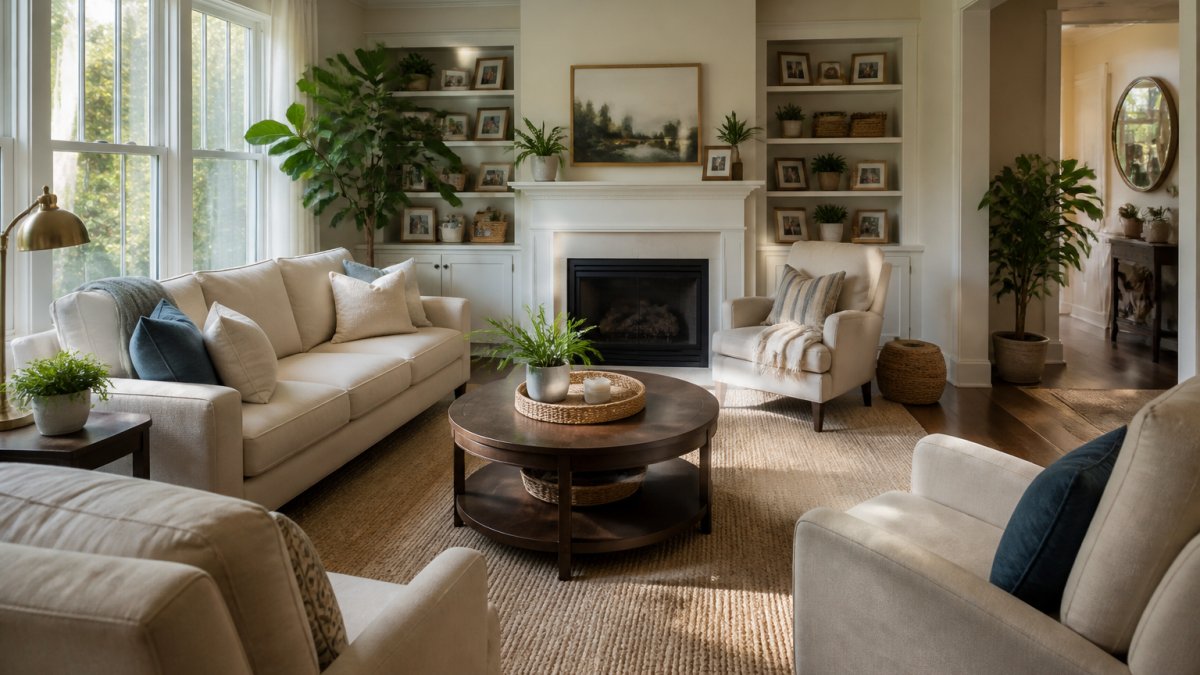
How you arrange furniture affects how you move through and feel in a space. Poor layout creates friction, bumping into furniture, awkward walking paths, or cramped seating arrangements. Good spatial layout supports natural flow and reduces daily frustration.
Evaluate your current layout:
Spatial arrangement influences both functionality and emotional comfort. Rooms with clear circulation (logical pathways) feel larger and less stressful. Furniture should define zones without blocking movement. A reading nook in a corner with a chair and lamp creates a dedicated calm space.
Consider sight lines too. Being able to see the room's entrance reduces anxiety, it's a psychological need rooted in safety. Avoid arranging seating with its back to the door.
Bloom Lighting Collection - Flaire Lighting →
Start with one room. Clear the space, then arrange furniture to support how you actually use that room. Move pieces around until pathways feel natural and the layout supports your daily activities.
Biophilic design, the practice of connecting indoor spaces with nature, reduces stress and improves well-being. Your brain evolved in natural environments. Bringing nature indoors satisfies a deep psychological need.
Biophilic design at home includes:
You don't need a garden or outdoor space to benefit from biophilic design. A few potted plants, wooden furniture, and nature-inspired artwork create connection. Research from the University of Michigan's environmental psychology studies shows that even brief exposure to natural elements reduces stress and improves focus.
Start small. Add one plant to your bedroom or workspace. Notice how it affects your mood over two weeks. Add another if you see improvement. Gradual changes feel less overwhelming and give you time to adjust.
A truly welcoming home reflects who you are. Impersonal spaces, even beautiful ones, don't support emotional well-being because they don't feel like yours. Personalization bridges the gap between a nice-looking room and a space that feels like home.
Personalization includes:
The key is intentionality. Each item should either serve a purpose or bring you joy. Avoid filling space with things you feel obligated to display. Your home should celebrate your identity, not conform to someone else's vision.
Home 2 Court's curated selection supports this personalization. The Petals Porcelain Diffuser in Moroccan Peony ($78.00) adds both visual elegance and a signature scent that makes your space feel distinctly yours. The White Tulips Acrylic Bloom Block ($23.00) brings nature-inspired artistry without clutter, perfect for shelves or desks that reflect your aesthetic.
Designing a home for emotional well-being doesn't require a complete renovation or unlimited budget. Wellness interior design works best when changes feel manageable and sustainable.
Prioritize based on impact and cost:
| Change | Impact Level | Estimated Cost | Effort |
|---|---|---|---|
| Declutter and organize | High | $0-100 | Low |
| Add natural light (open curtains daily) | High | $0 | Low |
| Rearrange furniture for better flow | High | $0 | Medium |
| Add plants (1-3 small plants) | Medium | $20-60 | Low |
| Upgrade lighting (add warm bulbs or lamps) | High | $30-150 | Low |
| Add personal photos and artwork | Medium | $0-100 | Low |
| Introduce calming scents (diffuser or candles) | Medium | $20-80 | Low |
| Paint an accent wall | Medium | $50-150 | High |
| Replace furniture for better comfort | High | $200+ | High |
Start with zero-cost changes: decluttering, rearranging, and opening curtains. These shift your emotional experience immediately. Next, add inexpensive items like plants, warm light bulbs, and personal photos.
The Bloom Lighting Collection ($180.00) and Bobbin LED Sage ($172.00) are mid-range investments that deliver high impact. For smaller budgets, the White Tulips Acrylic Bloom Block ($23.00) and Petals Diffuser ($78.00) deliver emotional impact at accessible price points.
Designing a home for emotional well-being is an ongoing process, not a one-time project. Your needs change with seasons, life events, and personal growth. The spaces that support you today might need adjustment in six months.
Start with the assessment step. From the Flaire Lighting that transforms your room's ambiance to the Petals Diffuser that adds calming fragrance, each piece is chosen to help you create a comfortable and joyful sanctuary.
Interior design influences emotional well-being through multiple pathways: lighting affects mood and concentration, color choices trigger emotional responses, spatial layout determines how freely you move through your home, and personalization reinforces your sense of identity. When these elements work together intentionally, your home becomes a restorative space that reduces stress, supports healthy behavior, and strengthens your sense of calm and self-esteem.
Soft, muted tones promote relaxation and calm. Blues and greens evoke nature and reduce stress. Warm neutrals like beige, taupe, and soft gray create comfort without overstimulation. Avoid bright, saturated colors in relaxation spaces; reserve those for accent walls or smaller areas. The key is choosing a color palette that feels personal to you, what calms one person may energize another, so test samples in your actual lighting before committing.
Natural light regulates your circadian rhythm, improves mood, and supports concentration. Exposure to daylight increases serotonin production, which boosts emotional well-being. If natural light is limited, position work and relaxation areas near windows, use mirrors to reflect light deeper into rooms, and add supplemental lighting like the Bloom Lighting Collection, battery-operated lamps designed for both indoor and outdoor spaces, to mimic natural light quality in darker areas.
Yes. Prioritize high-impact, low-cost changes first: declutter and organize existing items, rearrange furniture to improve flow, add plants or flowers (like the White Tulips Acrylic Bloom Bitty Block for under $25), and introduce soft textures through pillows or throws. Invest strategically in one or two quality pieces, like portable lighting or a signature scent diffuser, that anchor your design. Small, intentional additions often create more emotional impact than expensive overhauls.
