No Products in the Cart


Last Updated: September 28, 2026
Modern farmhouse minimalist decor blends two seemingly opposite aesthetics into one cohesive style. Modern farmhouse draws from rural heritage with natural materials, vintage touches, and warm textures. Minimalism strips away excess, focusing on clean lines and intentional pieces. When combined, they create spaces that feel both lived-in and serene.
Both styles reject unnecessary clutter and honor quality over quantity, making intentional choices about what stays in a room.
This guide walks you through creating that balance in your own space.
The difference between these styles and how they merge:
Stick to earthy, muted tones, warm whites, soft grays, warm beiges, and natural wood tones, that create visual calm while allowing texture and materials to shine. Avoid bright colors and trendy accent walls; instead, let one or two neutral base colors dominate and layer warmth through natural materials.
A practical approach to building your palette:
This palette works because texture and form become the visual interest, not color, making small spaces feel larger and more peaceful.
Choose pieces with simplified silhouettes and natural materials, solid wood tables with simple legs, neutral upholstered seating. Each piece should serve a purpose; this functional mindset keeps spaces from feeling cluttered.
Essential pieces for this aesthetic:
The Indra Side Table from Napa Home and Garden exemplifies this balance perfectly. Its white marble and brass construction delivers sophisticated minimalist form while the natural marble brings organic warmth. At 23.5 inches tall, it's proportional without being bulky. The 10.25-inch diameter keeps it compact, ideal for smaller spaces where every piece counts. Shop the Indra Side Table to add this curated piece to your space.

Texture is where modern farmhouse minimalist decor comes alive, carrying visual weight and adding warmth while staying minimal. Texture layering works differently depending on your space, restraint becomes critical in smaller rooms.
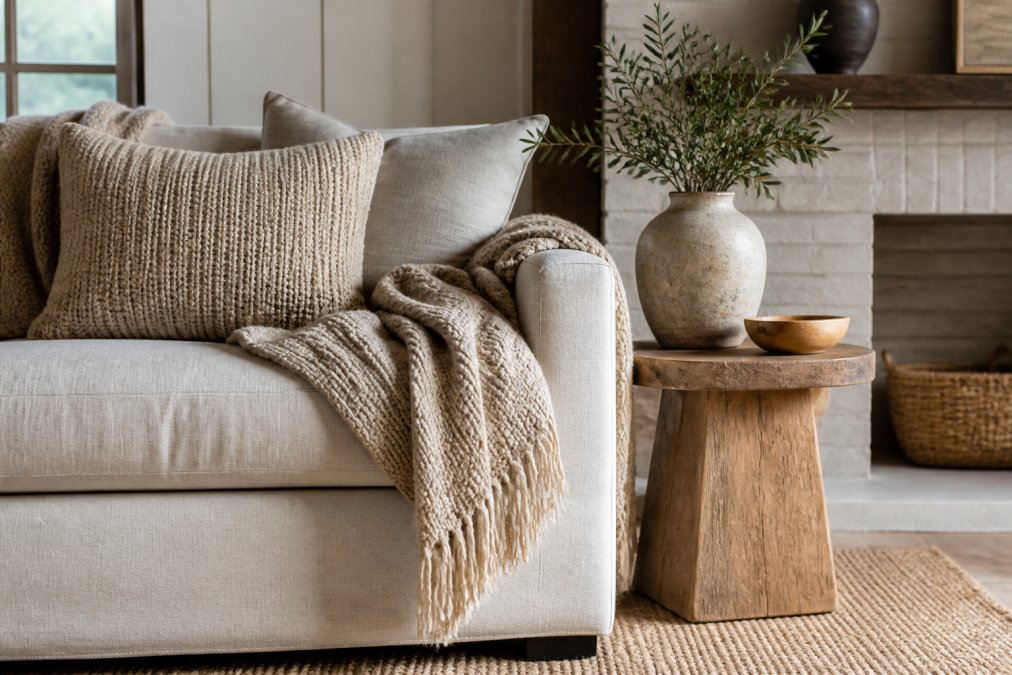
Texture Layering for Standard Spaces (400+ sq ft rooms)
In larger rooms, layer thoughtfully: a natural linen sofa, a woven throw blanket, a jute area rug, and one ceramic or wooden accent piece. Each texture should be visible and distinct without competing.
Common textures that work in this style:
Stick to 3-4 textures per room; this restraint makes the style feel sophisticated rather than cluttered.
Texture Layering for Small Spaces (Under 250 sq ft rooms)
In small spaces, choose ONE primary texture for your largest piece. Layer a second texture on a smaller piece (jute rug, woven basket), and add one accent piece (ceramic vase or wooden bowl). For bedrooms: linen bedding, one woven throw, one wooden nightstand. Keep walls clean to avoid visual compression.
Texture Placement Strategy for Small Spaces
Indra Side Table - Napa Home and Garden →
| Texture Type | Best Location | Quantity | Why |
|---|---|---|---|
| Soft (linen, cotton) | Large furniture (sofa, bed) | 1 primary piece | Anchors the room without visual noise |
| Woven (jute, rattan) | Floor (rug) or storage (basket) | 1 piece | Grounds the space; functional |
| Natural (wood, stone) | Furniture frames, accents | 2-3 pieces | Provides warmth without clutter |
| Handmade (ceramic, pottery) | Single shelf or side table | 1 piece | Becomes a focal point; draws the eye |
Stack textures vertically rather than spreading them horizontally. A wooden side table topped with a ceramic vase and a linen pillow creates visual interest without consuming floor space.
Touch textured pieces first; the tactile experience matters. In small spaces, this quality compensates for limited visual variety, making a single ceramic piece or wooden bowl more impactful.
Avoid mixing too many soft textures, layering textures on walls, using large-scale woven pieces, or displaying competing handmade pieces. Keep walls clean and limit to one meaningful accent per area.
Curate what you display and leave breathing room. Use simple wooden shelves with minimal brackets or metal supports. Apply the rule of restraint: a shelf holding four intentional pieces feels curated. Group items in odd numbers for visual rhythm.
Leave empty space, group by material, vary heights, include plants, and limit color to whites, grays, and wood tones.
The Barre Vase Large from Simon Pearce is perfect for this. Its clean, simple lines read as modern while the handmade lead-free glass brings organic warmth. At 36 ounces, it's substantial without being overwhelming. Place one on a shelf with books and a small plant. That's it. The vase becomes the focal point because nothing competes with it. Shop the Barre Vase to add this artisan piece to your shelves.

Natural wood tones ground a space and add organic warmth, but too much feels heavy. Choose one primary wood tone and stick with it, warm whites with warm wood, or cool grays with cool wood, for intentional consistency.
Where to feature natural wood:
Wooden picture frames anchor displays without adding visual noise. The Kendall Frame from Brouk and Co. in white lacquer finish bridges both aesthetics. Its wood core delivers farmhouse authenticity. The glossy white finish keeps it modern and minimal. Available in 4x6, 5x7, and 8x10 sizes, it works in any space. Shop the Kendall Frame 5x7 or 4x6 to frame meaningful moments without visual clutter.

Applying modern farmhouse minimalist decor works differently in each room, and your budget doesn't have to limit your success. The key is strategic repurposing of pieces you already own, combined with intentional new purchases that anchor the aesthetic.
Before buying anything, identify pieces that already fit the blend. Replace ornate hardware with simple knobs ($8-15 each), paint dark wood shelves soft white or gray ($25-40), or drape neutral throws over busy upholstery. These micro-transformations cost under $100 total but signal intentionality.
Invest in one quality neutral sofa as your anchor.
DIY Transformation Projects (Under $100 Each)
| Project | Materials | Cost | Time | Impact |
|---|---|---|---|---|
| Paint wooden furniture | Furniture-grade paint, brushes, primer | $30-50 | 4-6 hours | Transforms dated wood to soft white/gray |
| Replace hardware | Simple metal knobs or pulls | $8-15 per piece | 15 minutes per piece | Modernizes ornate furniture instantly |
| Drape throws strategically | Neutral linen or cotton throws | $20-40 each | 5 minutes | Softens busy upholstery, adds texture |
| Create floating shelves | Floating shelf brackets, wood boards | $40-80 per shelf | 1-2 hours | Adds open storage without bulk |
| Reframe existing art | Simple wood or metal frames | $15-30 per frame | 10 minutes | Unifies gallery walls, reduces visual noise |
| Paint lampshades | Fabric paint or spray paint | $10-20 | 30 minutes | Modernizes dated lighting fixtures |
| Build wooden crate storage | Wooden crates, stain or paint | $20-40 | 1 hour | Functional storage that looks intentional |
Modern farmhouse blends rustic, handmade elements with contemporary lines, often featuring natural wood and warm earthy tones. Minimalist design strips away excess, focusing on clean lines and essential pieces. When blended, they create a curated aesthetic that feels both lived-in and intentional, combining farmhouse warmth with minimalist clarity. The key is selecting functional pieces that serve a purpose while maintaining visual calm.
Start with neutral base colors: whites, soft grays, warm beiges, and muted taupes. Layer in earthy tones like sage green or soft terracotta sparingly. Limit your palette to three to four colors maximum to maintain minimalist principles. Natural wood grain provides organic warmth without adding visual clutter. This restraint prevents a farmhouse space from feeling busy while keeping the cozy, lived-in quality that makes it feel like home.
Yes, absolutely. The blend works best when rustic elements have clean lines and serve a functional purpose. Look for streamlined wood pieces without ornate details, like simple farmhouse tables or open shelving with minimal hardware. Pair these with neutral upholstery and uncluttered surfaces. The Indra Side Table from Home 2 Court exemplifies this balance, combining marble and brass in a modern silhouette that bridges both aesthetics.
Focus on natural materials, functional furniture with clean silhouettes, open shelving, neutral color palettes, and intentional texture layering. Include handmade or artisan pieces sparingly for warmth. Maintain clutter-free surfaces and open floor space. Architectural details matter, exposed wood beams, simple hardware, and raw finishes add character without visual noise. Every piece should earn its place through both beauty and function.
