No Products in the Cart


Last Updated: September 30, 2026
Open concept living rooms offer flexibility and flow, but home decor styles open concept require intentional design to create distinct zones and visual interest without walls. The best home decor styles for open concept living rooms 2026 layer multiple design elements strategically rather than choosing a single aesthetic.
Homeowners now recognize that open space needs intentional zoning, acoustic management, and focal points to feel both sophisticated and livable. At Home 2 Court, we curate pieces that work across zones while maintaining visual cohesion.
Every design choice in open concept spaces is visible from multiple vantage points. A single accent color, area rug, or statement lighting fixture shapes how the entire space feels. The best home decor styles for open concept living rooms balance warmth with structure, creating cozy atmospheres without visual chaos.
Broken-concept design creates semi-separate zones using furniture arrangement, lighting, and textural contrast rather than walls, providing openness with spatial definition.
Broken-concept layouts use visual anchors, statement mirrors, accent walls, or distinct lighting zones, to signal where areas begin and end. Area rugs define seating zones, pendant lights mark dining spaces, and tall bookcases create subtle boundaries without blocking sightlines.
This approach solves acoustic challenges in purely open spaces. By creating visual zones, you encourage people to cluster in specific areas, improving acoustics and intentionality.
For your broken-concept layout, consider these elements:
The National Association of Home Builders has documented a steady shift toward this hybrid approach, as homeowners seek the balance between openness and defined spaces.
Deep earth tones paired with jewel tones like emerald, sapphire, or deep burgundy create visual depth and richness without overwhelming open concept spaces.
Earth tones ground a room and work as a foundation for walls and large furniture. Jewel tones act as accents through throw pillows, artwork, or statement pieces, adding personality without competing for attention.
Your color palette should reflect across all zones to create visual flow while maintaining distinct character in each area.
Consider these color combinations for 2026:
The American Society of Interior Designers notes that color psychology continues to influence how homeowners approach open spaces, with deeper, warmer tones trending as people seek more intimate atmospheres within larger footprints.
Modern luxury means intentional. Choose furniture that serves a purpose, looks refined, and works across zones with clean lines and quality materials.
Choose furniture that defines zones without blocking sightlines: low-profile sectionals, glass or marble side tables, and brass or gold-toned frames add sophistication without visual weight.
The Indra Side Table from Napa Home & Garden exemplifies this approach: at 23.5 inches tall with a white marble top and gold metal base, its petite footprint maintains visual flow while adding modern luxury.

Key furniture principles: choose pieces with exposed legs, mix materials (marble, wood, brass, glass), prioritize quality over quantity, and ensure arrangement creates natural zones without blocking sightlines.
Zoning transforms open space from feeling chaotic to feeling intentional. The most effective zoning techniques use layered visual signals rather than physical barriers. Area rugs, lighting, and textural contrast work together to create spatial definition while maintaining the openness you want.
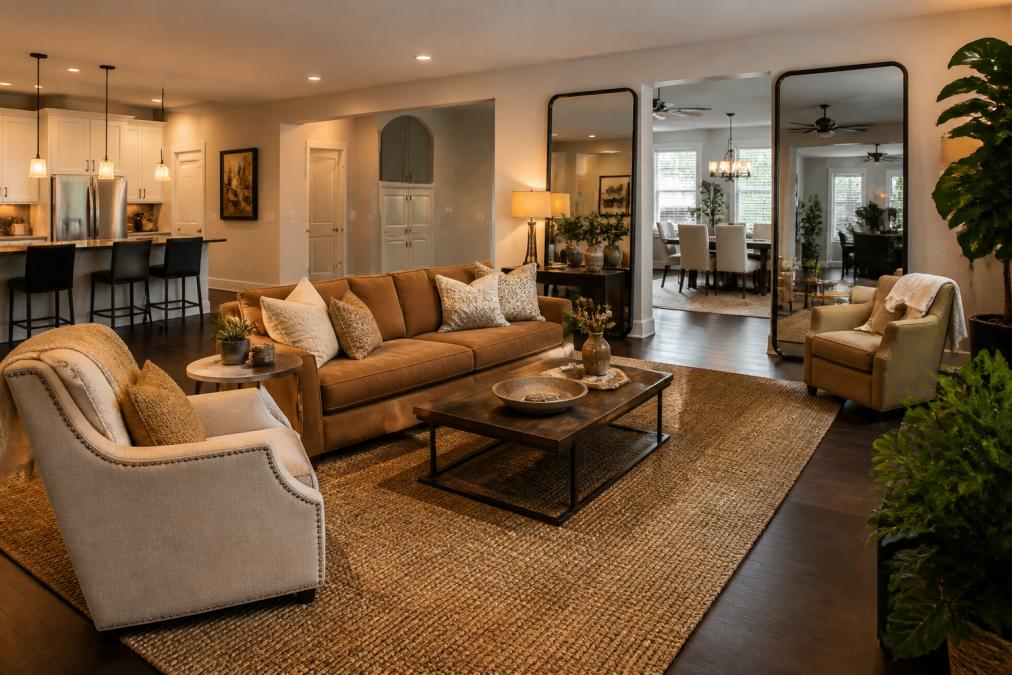
Area rugs are your most powerful zoning tool, anchoring furniture groupings and creating visual separation between zones.
Choose rugs in complementary colors that tie back to your overall palette. Layer textures with smooth rugs paired with textured throws or woven poufs for depth.
Blue Chinoiserie Ginger Jar - Large →
The Park Hill Collection Urban Living Diamond Pattern Alpaca Wool Throw brings texture and warmth, hand-woven from luxurious alpaca wool with a diamond pattern that adds visual interest without competing with other decor.
Mix smooth surfaces (polished marble, glass) with rough textures (woven throws, jute rugs, live-edge wood) to create visual interest and intentional zones.
Lighting is the second most powerful zoning tool. Use pendant lights, table lamps, or wall sconces to illuminate specific zones and create focal points that anchor spaces.
The Napa Home & Garden Daphne Lantern in Antique Gold demonstrates how lighting creates function and focal point with its contemporary chinoiserie style and versatile antique gold finish.

Layered lighting prevents open spaces from feeling flat. Combine ambient light, task lighting, and accent lighting to create depth and atmosphere across zones.
Consider these lighting strategies:
Natural textures, wood, stone, fiber, glass, add warmth and improve acoustics in open concept spaces by absorbing sound rather than reflecting it.
Live-edge wood, natural stone, woven textiles, and raw materials create visual interest. Wooden accent walls, jute rugs, linen pillows, and woven baskets soften hard surfaces.
The Woodbury Twist Vase from Simon Pearce exemplifies how natural materials create focal points, with its unique twist design catching light and adding visual interest.
Materials that work well for open concept:
Layered lighting creates atmosphere, defines zones, and highlights design elements. Move away from single overhead lights toward a combination of ambient, task, and accent lighting.
Consider these lighting design principles:
The best home decor styles open concept come from curated sources where quality and intentionality matter.
When buying online, use these strategies:
| Design Element | Purpose | Best Placement | Impact |
|---|---|---|---|
| Area rugs | Define zones, add warmth | Under furniture groupings | Creates visual separation |
| Accent lighting | Highlight focal points, create ambiance | Above statement pieces, in corners | Shapes mood and atmosphere |
| Statement mirrors | Reflect light, expand space visually | Opposite windows or focal walls | Increases perceived space |
| Natural textures | Add warmth, improve acoustics | Throughout all zones | Prevents coldness, adds depth |
| Throw pillows & textiles | Add color, comfort, texture | On seating, layered | Ties zones together visually |
| Decorative vessels | Serve as focal points | On side tables, mantels, shelving | Anchors zones with vertical interest |
SHOP NOW!
Use area rugs and accent lighting to define separate zones rather than filling the entire space with furniture. Choose a consistent color palette of earth tones or jewel tones across all zones to create visual cohesion. Incorporate statement pieces like mirrors or textured ginger jars strategically to draw the eye without overwhelming the space. Keep accessories minimal and intentional, each piece should serve a purpose or add textural interest.
Broken-concept layouts are replacing fully open designs, allowing homeowners to create distinct zones while maintaining sight lines. Deep earth tones paired with jewel tones create visual depth, while natural textures and sustainable materials add warmth. Modern luxury furniture emphasizes quality craftsmanship and timeless pieces rather than trends. Ambient lighting and biophilic design elements bring comfort and connection to nature indoors.
Layer area rugs to anchor different functional areas, one for seating, another for dining or entertainment. Use accent lighting like lanterns or statement hurricanes to highlight each zone. Arrange furniture to create natural boundaries without walls. Incorporate tall pieces like mirrors or textured ginger jars to establish vertical definition. Color blocking through throw pillows, textiles, and decor helps separate zones while maintaining overall design flow.
Home 2 Court offers a curated selection of statement pieces like chinoiserie ginger jars, mirrors, and lighting designed to work cohesively in open spaces. Each piece is thoughtfully chosen to complement modern luxury aesthetics and broken-concept layouts. Browse by style category or color palette to find pieces that match your vision, and use product descriptions to understand how items work together in real spaces.
