No Products in the Cart


Last Updated: September 18, 2026
The right plants transform a bedroom from a simple sleeping space into a sanctuary for rest and recovery. Creating a calming environment goes beyond aesthetics; it's about supporting better sleep and reducing anxiety through biophilic design.
Plants improve indoor air quality by absorbing carbon dioxide and releasing oxygen, especially during nocturnal hours when you're breathing in a closed space. Beyond air purification, the presence of foliage reduces stress levels. Many people find that simply looking at plants lowers heart rate and blood pressure, creating a more peaceful state before sleep.
The 5 best plants for a calming bedroom 2026 aren't just decorative choices, they're functional wellness tools. A bedroom filled with low-maintenance plants that thrive in indirect sunlight creates visual serenity without demanding constant attention. This matters because stress about plant care defeats the purpose of having them.
Not every bedroom gets ideal lighting, and that's okay. The best calming bedroom plants adapt to various conditions without wilting or requiring daily fussing. These are the species that forgive inconsistent watering and still deliver the air-purifying and stress-relief benefits you're after.
Snake plants stand out as the ultimate low-maintenance choice. They tolerate low-light conditions, irregular watering, and temperature fluctuations. Many people report that snake plants are nearly impossible to kill, which removes the anxiety of plant care entirely.
Pothos vines grow in low to moderate light and adapt to whatever humidity levels exist in your bedroom. They don't demand frequent watering and actually prefer to dry out slightly between waterings. The trailing foliage adds visual interest without cluttering the space.
ZZ plants thrive in low-light conditions and have a dormancy period in winter when they require even less water. This seasonal care adjustment means you can reduce watering frequency in colder months, aligning with natural plant cycles.
Dracaena varieties (like the corn plant) tolerate indirect sunlight and inconsistent watering schedules. Their tall, slender growth pattern works well in corners or against walls without consuming much floor space.
| Plant | Light Needs | Watering Frequency | Pet-Safe | Best For |
|---|---|---|---|---|
| Snake Plant | Low to bright | Every 2-3 weeks | Yes | Beginners, pet owners |
| Pothos | Low to moderate | Every 1-2 weeks | No (mildly toxic) | Trailing decor, small spaces |
| ZZ Plant | Low to moderate | Every 2-3 weeks | Yes | Forgetful waterers |
| Dracaena | Indirect sunlight | Every 1-2 weeks | Varies by type | Tall, corner placements |
Indoor air quality directly impacts sleep quality and respiratory health. The air in a sealed bedroom accumulates volatile organic compounds (VOCs) from furniture off-gassing, synthetic bedding materials, cleaning products, and paint finishes. Plants remove these compounds through a two-stage process: foliage absorbs gaseous pollutants directly from the air, while soil microbes and plant roots break down absorbed compounds into harmless byproducts.
The most effective bedroom air purifiers target specific pollutants. Spider plants excel at removing formaldehyde, a common VOC released from particleboard furniture and adhesives. Peace lilies absorb ammonia from cleaning products and benzene from synthetic fabrics. Snake plants and ZZ plants are slower air purifiers but excel at nighttime oxygen production, which matters in sealed bedrooms where carbon dioxide accumulates during sleep.
Research from the Environmental Protection Agency indicates that indoor air can be 2-5 times more polluted than outdoor air, particularly in bedrooms with poor ventilation (the EPA). Plants alone cannot replace air filtration systems, but they meaningfully reduce pollutant concentrations when deployed strategically. A single plant in a 200-square-foot bedroom produces minimal measurable improvement. A cluster of 3-5 plants positioned around the room, on windowsills, nightstands, and corners, creates noticeable air quality improvements within 2-3 weeks.
The psychological benefit compounds the physical effect. Knowing your bedroom air is actively being purified reduces nighttime anxiety and creates a sense of control over your sleep environment. This mental shift alone improves sleep onset latency and perceived sleep quality, independent of the actual air purification occurring.
Plant placement matters for air purification effectiveness. Plants positioned near the head of the bed or on nightstands maximize exposure to the air you're breathing during sleep. Avoid placing all plants in one corner; distribute them around the room to create even air circulation and pollutant removal.
If you share your bedroom with pets, plant selection becomes critical. Some popular calming plants are mildly toxic to cats and dogs, causing digestive upset if nibbled.
Pothos and dracaenas contain compounds that can cause mild toxicity, so they're better suited to bedrooms where pets don't have access.
The safest approach is choosing from the pet-safe list and positioning plants on high shelves or hanging planters where pets can't reach them. This adds another layer of security without sacrificing the calming bedroom aesthetic.
Many pet owners find that hanging planters work best, they elevate plants out of reach while still providing the visual and air-purifying benefits.
The aesthetic appeal of bedroom plants matters as much as their function. Plants become part of your visual environment, so choosing the right planters and placement creates a cohesive, calming space rather than a cluttered one.
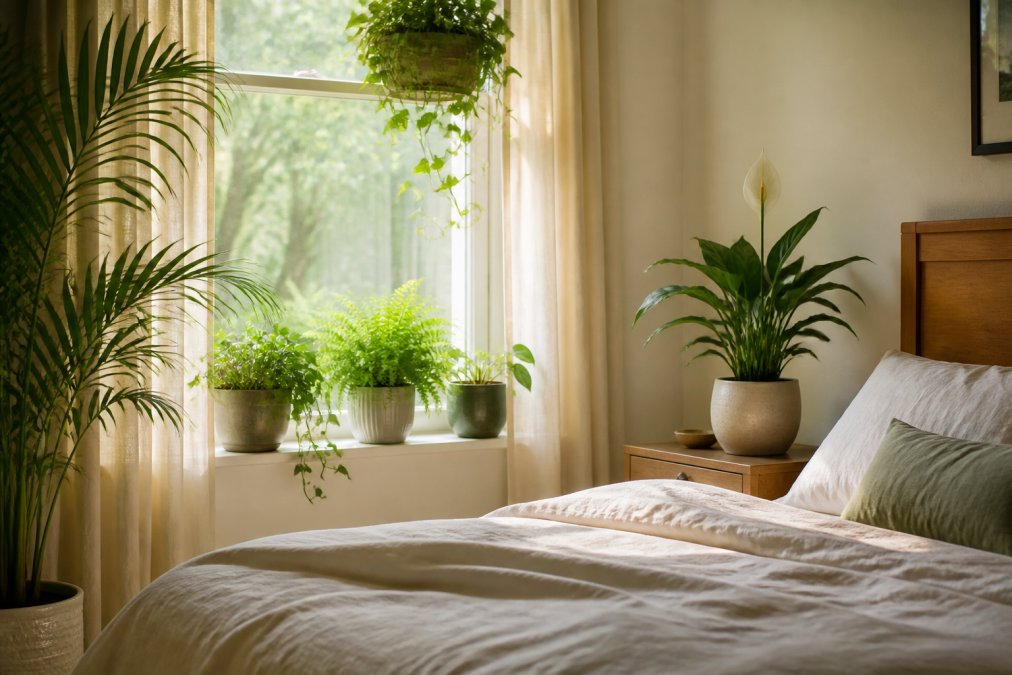
Windowsills are the obvious choice for plant placement, but they're not the only option. Hanging plants from ceiling hooks or wall-mounted planters add vertical greenery without consuming floor or furniture space. This approach works especially well in small bedrooms where every inch matters.
Nightstands benefit from compact, low-growing plants like snake plants or small pothos. Avoid tall plants that block sightlines or create visual clutter directly at eye level when you're lying down.
Corner placements for taller plants like dracaenas create a sense of enclosure without making the room feel cramped. A single tall plant in a corner draws the eye upward, making the space feel larger while adding botanical interest.
Planters matter as much as the plants themselves. Ceramic pots in neutral colors (white, cream, soft gray) complement most bedroom styles. The Chinoiserie Cachepot Small from Home 2 Court offers classic chinoiserie-inspired bamboo details in clean white, bringing sophisticated botanical styling to any bedroom at $30.00. For larger plants or multiple specimens, the Saul Pots Set of Two provides a two-tone farmhouse aesthetic with creamy white glaze and dark clay exposure, starting at $55.00.
Space-saving vertical gardening works well in small bedrooms. Wall-mounted planters or floating shelves with trailing plants create a living wall effect without consuming floor space. This approach maximizes the calming benefits of foliage while respecting the physical constraints of compact rooms.
Plants naturally shift their growth patterns with seasons, and aligning your care routine with these cycles prevents the frustration of thinking your plant is dying when it's actually entering dormancy. Understanding seasonal shifts is essential for maintaining healthy bedroom plants year-round.
Fall (September-November): Transition to Dormancy
As daylight decreases and temperatures cool, most bedroom plants begin slowing growth. Reduce watering frequency by 25-30% starting in late September. Snake plants and ZZ plants that required watering every 2-3 weeks during summer can shift to every 3-4 weeks. Check soil moisture before watering; if the top 2 inches feel dry, wait another 3-5 days before watering.
Move plants closer to windows during fall to maximize diminishing light. If your bedroom receives less than 4 hours of indirect sunlight daily, consider supplementing with a low-wattage grow light positioned 12-18 inches above foliage for 8-10 hours daily. This prevents the leggy, pale growth that occurs when light becomes limiting.
Stop fertilizing in late September. Plants entering dormancy don't require nutrient supplementation and excess fertilizer can cause salt buildup in soil, damaging roots during the dormant period.
Winter (December-February): Minimal Care Period
Winter is the dormancy peak.
Spring (March-May): Growth Resumption
Summer (June-August): Peak Growth
The psychological benefit of caring for plants through seasonal changes shouldn't be underestimated. Adjusting your plant care routine with the seasons creates a sense of connection to natural cycles and rhythms, which itself reduces stress and supports better sleep quality. This intentional engagement with your bedroom environment transforms plants from passive decor into active wellness partners.
Snake plants and pothos are excellent choices for bedrooms because they tolerate low light. These calming bedroom plants require minimal care, and their presence adds a serene atmosphere to your space. Place them on nightstands or windowsills where they'll benefit from indirect sunlight.
Air-purifying plants for sleep remove volatile organic compounds (VOCs) like formaldehyde and benzene from indoor air through their foliage and root systems. Better air quality reduces respiratory irritation and supports deeper, more restful sleep cycles.
Yes. Avoid highly fragrant flowers like gardenias or jasmine if strong scents trigger headaches or disrupt your sleep. Stick with low-odor varieties like snake plant and pothos for comfort.
Snake plants and pothos are the most forgiving low-maintenance bedroom plants for dim spaces. They thrive in indirect sunlight and low-light environments, require watering only every 2-3 weeks, and tolerate neglect better than most houseplants. These hardy options are ideal if your bedroom lacks bright windows or direct sunlight.
