No Products in the Cart


Last Updated: October 23, 2026
Quick Summary
The best dinner party games for adults seat easily around a table, teach in under five minutes, and keep the room talking. Our five picks are Mahjong, Gin Rummy Tiles, easy no-rule party games, icebreaker games, and no-supply games, timed around the meal rather than over it.
The best dinner party games for adults share three traits: they seat easily around a table, they teach in under five minutes, and they keep the room talking. We have watched hosts cycle through dozens of options, and the winners are rarely the loudest ones. Most guides push big group icebreakers, but a dinner party is a seated, food-adjacent event with a smaller crowd.
That changes the math. A game that needs a cleared floor, a loud room, or 20 minutes of rules reading will stall your evening before dessert. The five games below are chosen for real tables, real guests, and real conversation.
Use this table to match a game to your room before you buy or plan anything.
| Game | Ideal Group Size | Setup Time | Noise Level | Best Moment |
|---|---|---|---|---|
| Mahjong | 4 players | 5-10 minutes | Low to medium | After dinner, seated |
| Gin Rummy Tiles | 2-4 players | 2 minutes | Low | Cocktail hour or after dinner |
| Easy no-rule party games | 4-10 | Under 2 minutes | Medium | Between courses |
| Icebreaker games | 6-12 | 3 minutes | Medium | Arrival and first drinks |
| No-supply games | 4-12 | None | Medium to high | Any lull in the evening |
The pattern is simple: quieter, seated games suit the meal itself, and livelier games fill the gaps around it.
Mahjong is a tile-based tabletop game for four players that keeps everyone seated, focused, and talking between hands. It suits dinner parties because the table is already the center of the room. The barrier is equipment and rules, so buy a complete set and learn one card together.
Our pick is the Mahjong Set with Racks and Mahjong Themed Tote, which includes traditional tiles, four multi-colored racks, and a themed tote for storage and transport. New players should add the International Mahjong Card, a modern guide to which hands to build, designed to work for players with color-vision differences.

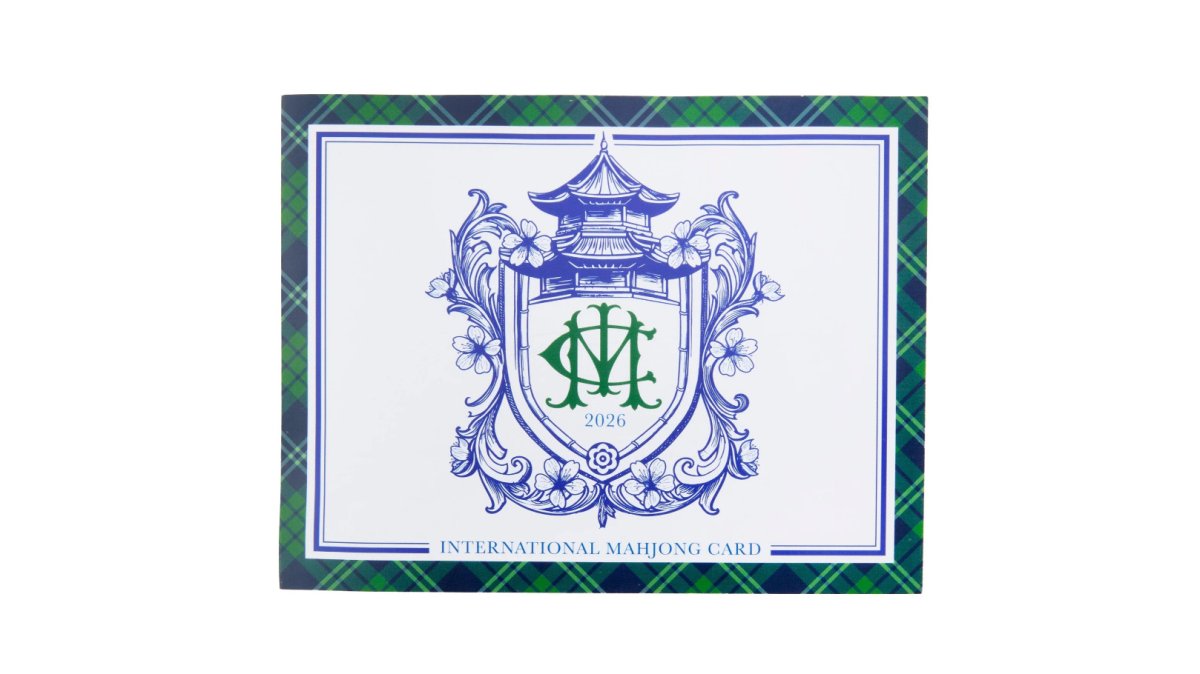
A common mistake is teaching mahjong mid-meal. Play one practice hand before dinner so the rules land while everyone is patient, then run a real hand afterward.
Gin Rummy Tiles gives you the rhythm of a card game without a deck, which solves a real hosting problem: cards get bent, drinks get spilled, and hands are hard to hold while eating.
The "Clementine Oh My Rummi" Gin Rummy Set includes 112 Rummi tiles across four suits, jokers, blanks, four tile racks, and a zippered case. It plays well with two to four people, so it works as a side table game while the main table finishes a course. The rules are close enough to rummy that most adults pick them up in one round.

Where it falls short: it is not a whole-room game. If your party is twelve people deep, this becomes a corner activity rather than the main event.
Easy party games for adults work best when the rules fit in one sentence and the materials are already on your table. The goal is laughter, not a rulebook, and the host should be able to explain a game while carrying a plate.
Here are three that consistently land around a table, with the fit details that actually decide whether they work:
Each of these runs on conversation alone, which is the point. They fill the gap between the main course and dessert without pulling anyone away from the table.
Icebreaker games for adults succeed or fail on one question: do they create real conversation, or do they feel like a corporate workshop?
"Clementine Oh My Rummi" Gin Rummy Set - Oh My Mahjong →
A format that works at a dinner table: each guest answers one prompt before the first course. Keep prompts concrete rather than abstract.
Specific prompts produce stories. Abstract prompts ("share a fun fact") produce silence. Give each guest one prompt, go around once, and stop.
For mixed groups where some guests know each other and some do not, pair people deliberately at the table rather than letting couples cluster. A seating plan is the quietest icebreaker you can run. Two practical mechanisms make it work:
Timing matters as much as the prompt.
Party games for adults without supplies are the safety net of any hosting plan. They require nothing you do not already own, which means they work when the evening runs long or the planned activity falls flat.
The strongest no-supply options for a seated group:
If you want one upgrade that makes the whole table feel considered, tile shufflers are the detail most hosts miss. The Sip & Shuffle Tile Shufflers are a set of two with smooth, rounded edges that help you shuffle and wash tiles at the start of every hand, and they protect both tiles and manicures.

Dinner party conversation games are games where the talking is the game. They work because they need no equipment and no scoreboard, and they fit around food instead of competing with it.
Here is how we would time an evening:
| Time | What Happens | Game to Run |
|---|---|---|
| First 20 minutes | Arrival, drinks, introductions | One icebreaker prompt per guest |
| Starters | Table settles, conversation warms | Conversation prompts, no scoring |
| Main course | Food is the focus | No game; let the table talk |
| Between courses | Energy dips | One easy no-rule game |
| After dinner | Plates cleared, drinks refilled | Mahjong or Gin Rummy Tiles |
| Late evening | Guests linger | No-supply games for whoever remains |
One hosting detail ties the drinks to the games. The Mahjong Tile Drink Markers slip over a glass rim so guests can identify their own drink at a crowded table, which matters once a game is underway and glasses start to look alike.
A dinner party where the games feel bolted on is worse than one with no games at all. The fix is choosing pieces that belong on your table and timing them around the meal rather than over it.
The best dinner party games are seated, low-noise, and easy to explain in under two minutes. Mahjong works well for a table of four because it plays entirely on the table and can pause between courses. Gin rummy tiles suit guests who want a familiar rhythm without a deck of cards. For a larger group, a pass-the-prompt conversation game keeps everyone involved without moving chairs. Pick one game per evening rather than stacking several, and match the length to the gap between plates.
Icebreaker games for adults work best when they are short, seated, and don't single anyone out. A round of two truths and a lie, a one-question prompt passed around the table, or a quick name-and-detail introduction all take under five minutes. Place them before the first course while drinks are being poured, when people are still standing and mingling. Avoid anything that requires physical performance, and skip prompts that push guests to reveal personal or financial details.
Party games for adults without supplies rely on nothing but the people at the table. Favorites include twenty questions, word association, a story built one sentence at a time around the table, and trivia pulled from the group's shared history. These work in any room, need no setup, and cost nothing. The trade-off is that they depend on a confident host to keep the pace. If your group is quieter, a printed prompt card or a tile set gives people something to hold and focus on.
Timing matters more than the game itself. Use conversation prompts during cocktails, a short icebreaker as guests sit, then hold the main game until after the plates are cleared. Keep each round under 20 minutes so no one feels trapped. Offer an alcohol-free option and a low-pressure exit for guests who prefer to watch. A single well-chosen game that fits your group size beats three that don't, and a tidy table with room to play makes the whole evening feel intentional.

